Gerald Hiestand
11 articles
Resisting the Exaltation of the Woman
Thanks to my four responders. I’ve done my best to understand their responses, as I’m sure they did their best to understand my essay. I respond in two parts. My first response is directed at Alastair, Aaron, and Benjamin, all of whom I sense to be a bit to the…
Has Christianity Been Good for Women?
Has Christianity been good for women? I give my short answer at the beginning: yes. I am not an expert on gender studies. Nor am I a woman. So I don’t contribute this essay as a scholar on either topic. But as a pastor, I am occupationally responsible to give…

Tom Holland and the Liberating Power of Christianity
Have you heard of Tom Holland? Not the young Tom Holland of Spiderman fame. No doubt you’ve heard of him. I’m referring to the middle age Oxford-trained historian who recently wrote Dominion: The Making of the Western Mind . (Both Hollands are British, so you’ll be forgiven for confusing them.)…
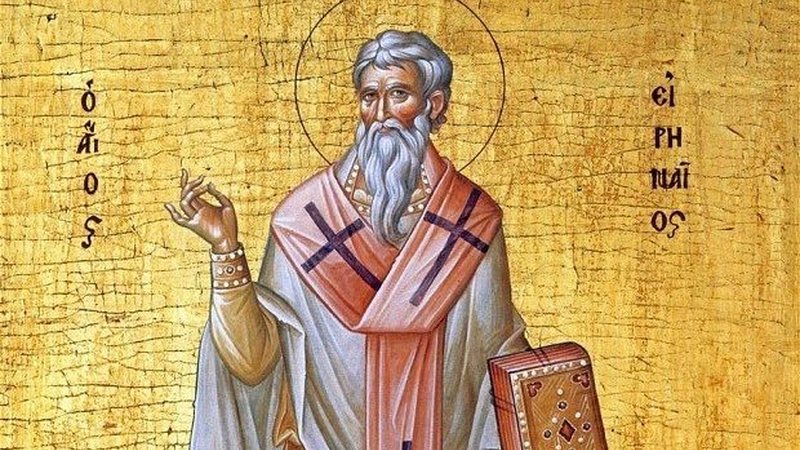
St. Irenaeus, the Beatific Vision, and the Instrumentalization of Creation
I’ve spent the last few years studying the theology of St. Irenaeus (d. circ. 200ad). In particular, I’ve been gripped by the way that Irenaeus consistently resisted the anti-body emphasis that emerged in later Christian theology. His eschatology is remarkably focused on the resurrection of the body, and the renewal…
What Irenaeus’ Christology Teaches Us about the Goodness of our Bodies
The Christian tradition has always had an uneasy relationship with the materiality of creation. Dirt, liquid, sex, blood, and bodies—the world and the flesh stand in company with the Devil as two of the three great enemies of the saints. Mundus, caro, et diabolus , as the old Latin saying…
Paul and James on the Meaning of Genesis 15:6
One of the more revealing aspects of Paul and James’ soteriology is the different ways they both use Genesis 15:6 (“And Abraham believed God and it was counted for him as righteousness,”) as a proof text to defend their comments about the gospel. The key observation to make is that…
God of the Furies
The idea of atonement is not a distinctly Christian, or even Hebraic, concept. It also makes an appearance in ancient Greek thought (among other places). The Greek tradition is by no means monolithic, so it isn’t possible to speak of a “Greek” concept of atonement. But there are certain commonalities…
The Idiot and the Limits of Compassion
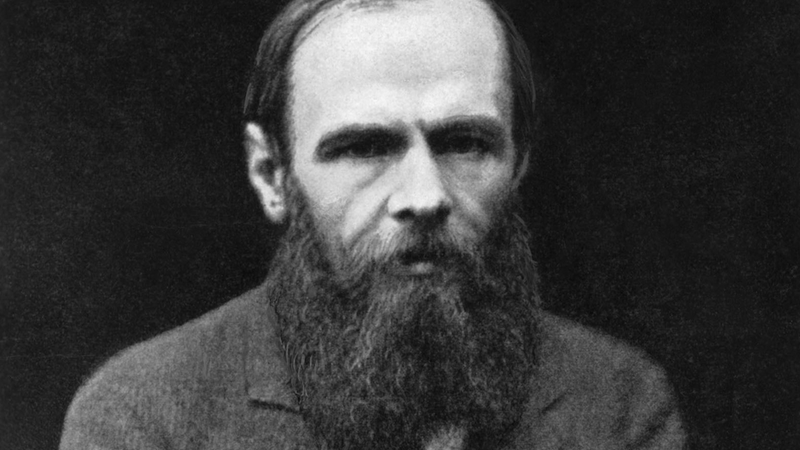
Dostoyevsky’s novel, The Idiot , like his other major works, is a complex evaluation of the human condition—a juxtaposition of the innate goodness and innate evil that resides within every human heart. There is much one can say about The Idiot . I am no specialist of Russian literature, or…

Must A Light Bulb Be "Oriented Toward Illumination"?
Mr. Martian: What’s that there? Mr. Edison: (Edison holds up a standard, 60 watt lightbulb). It’s a lightbulb. Mr. Martian: A “lightbulb” you say? What exactly is a “lightbulb”? Mr. Edison: A lightbulb is an object used to illuminate a dark area, say a room. It’s made primarily of filament…
Augustine on Pagan Virtue
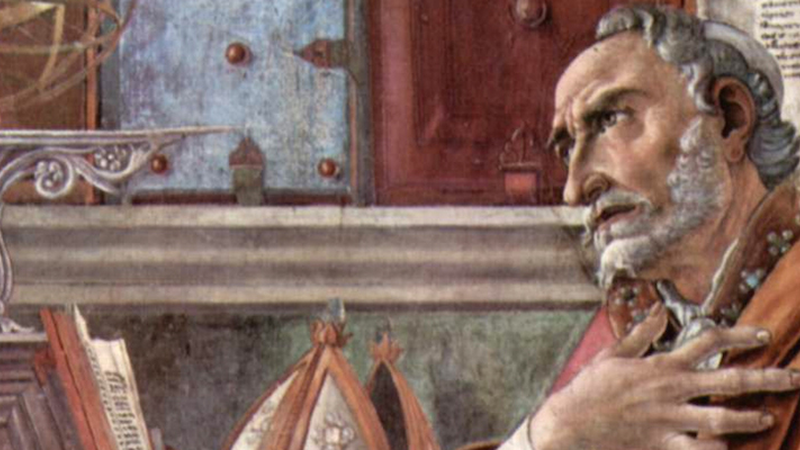
My children attend a classical Christian school, situated in the independent “free church” evangelical tradition. Over the past few years they have been growing in their acquaintance with the world of Homer, Plato, Virgil, and Livy. They enjoy it, and I envy it. The school is a great school. My…

Sexual Idolatry
Augustine famously prayed, “Our hearts our restless until they rest in You.” True indeed. Being creatures, we inherently sense our ontological poverty—our innate condition of dependence—and are compelled to find a sense of security. And it is also true—as Augustine’s own narrative painfully illustrates—that one of the things we most…