Ryan Handermann
7 articles

The Stages of a Man’s Life and the Second Table of the Law
In As You Like It , Shakespeare famously describes the seven ages of a man’s life. The division of man’s life into stages is not an invention by Shakespeare, nor merely a common medieval artifice, but an expression of the real journey taken in life. Shakespeare seems to divide up…

Luke’s Gospel of Seven
In his prologue, Luke tells us that his gospel history is an “orderly account” (1:3). Although generally chronological, time is not the only or the main organizing principle for his history. To argue for Luke’s main theme would take up too much space, but instead I want to explore one…
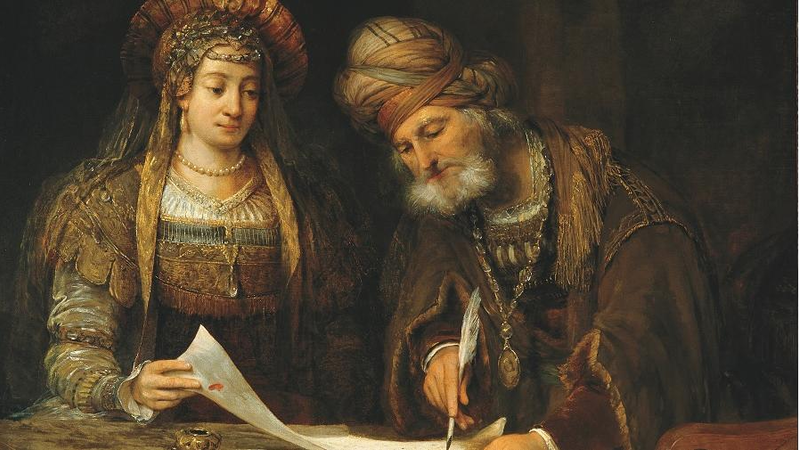
The Absent Presence of God: The Storied Theology of Esther for the Modern Age
God is Not There God is not in the book of Esther. Do a word search and you will get 0 results. Also try Lord, Yahweh, Prayer, Temple, or Sacrifice. Even names with God’s name in them, like Elijah, Jeremiah, or Daniel are missing. The fool says in his heart,…
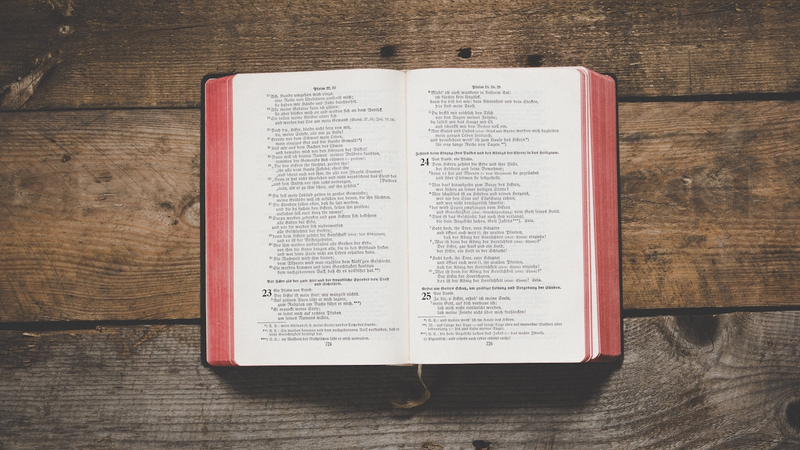
Psalm 23: A Lesson in Reading Biblical Poetry
Parallelism: A Course Correction If you have ever studied Hebrew poetry, you have probably heard its basic poetic feature described as “parallelism.” Hebrew poetry is not metered, it does not rhyme, it does not employ many of the common poetical tropes, but its distinctive (and almost universal) feature is commonly…

Two Shall Become One Flesh, (Part 3): Realizing Recovering
Despite the layers of wiping, covering, and ransoming during the Day of Recoverings, true unity still has not been achieved. Divorce is still possible; God still might leave his people. Thus the Day of Recoverings must be repeated every year. The perpetual expression of unity between God and man in…

Two Shall Become One Flesh, (Part 2): The Day of Recoverings
The events of Leviticus 16 are commonly known as “The Day of Atonement,” from the Hebrew phrase yom hakippurim, in Leviticus 23:27. However, it would be more accurate to say, “The Day of Atonements,” [i] since the word is plural. The plurality primarily relates to 16:33, which states five different…

Two Shall Become One Flesh, I: Atonement and Eschatology
Mary Douglas, against the common notion that primitive religious rituals were illogical and random asserts, “The analysis of ritual symbolism cannot begin until we recognize ritual as an attempt to create and maintain a particular culture … Any culture is a series of structures which comprise social forms, values, cosmology,…