Stephen Long
7 articles
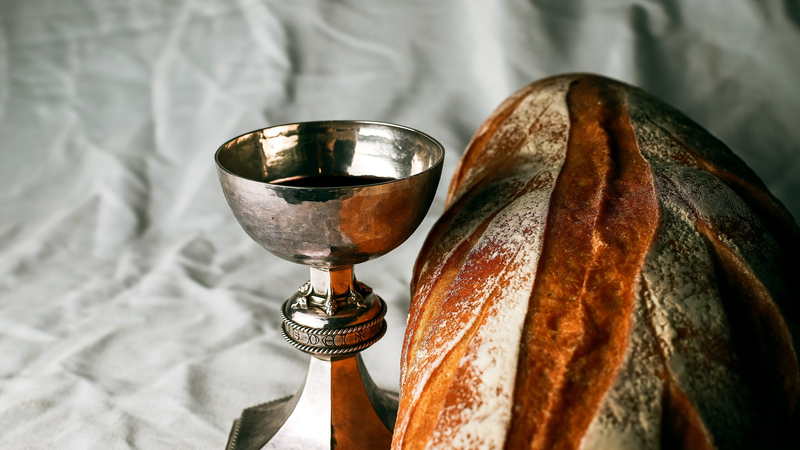
Articulating Sacramental Presence
I would like to thank Jim Keating, Matthew Colvin, Leonard Vander Zee, Chris Green and Jacob Hanby for taking the time to respond to my “ Bodies and the Body of Christ ” essay. Why add one more essay to the multitudes already written on the sacrament of Christ’s Body…
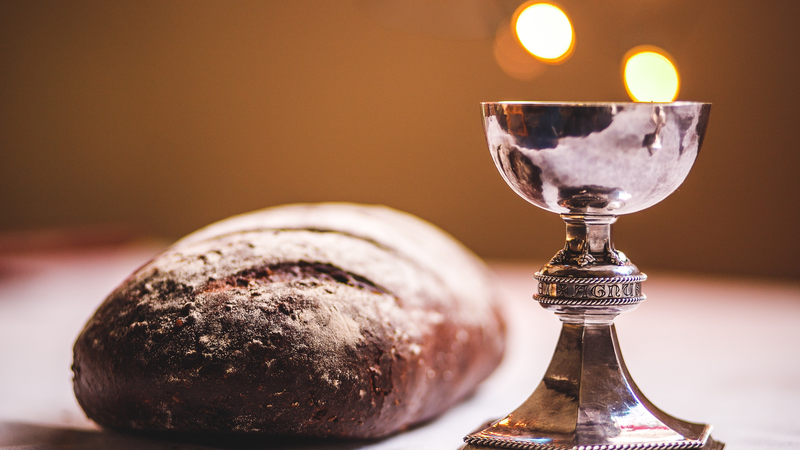
Bodies and the Body of Christ
What exactly “happens” when Christians celebrate the Lord’s Supper? More specifically, what happens to the loaf and the cup? [i] For many American Evangelicals—and even for quite a few American Catholics—the only point of the Supper is to stir up and express personal piety: In subjectively “remembering” the sacrificial death…

Maker of Heaven and Earth, (Part 5)
In my previous posts, I looked at the theme of creation as it is found in a sequence of psalms devoted to Yahweh’s Kingship (Psalms 93-100). Among other matters, these psalms declare that when the Kingdom of Israel’s God comes, it is the Kingdom of the world’s own Creator .…
Maker of Heaven and Earth, (Part 4)
In my previous two posts, I looked at aspects of Psalms 93, 95, 96 and 98 that declare Yahweh, the divine King, to be the world’s own Creator. In my next post, I plan to argue that the creation theology of the sub-section constituted by Psalms 93-100 contributes to the…

Maker of Heaven and Earth, (Part 3)
I started looking at a sequence of psalms on divine Kingship (Psalms 93-100) in my last post, part of a series looking at the Old Testament’s witness to Yahweh’s exercise of absolute mastery over his cosmos. I am not trying to “prove” a doctrine of creation ex nihilo directly from…

Maker of Heaven and Earth, Part 2
Taking a cue in my last post from early Christian apologetics, I suggested that if we wish to articulate and defend a doctrine of creation ex nihilo in contemporary theology, we would do well to offer a thick description of Yahweh’s divine monarchia (his sole rule or sovereignty). Rather than…

Maker of Heaven and Earth
From an early period in church history, Christians have confessed belief in a God who created “out of nothing.” God doesn’t need pre-existent matter to work with like a human artisan does; rather, God both calls into existence the material substrate he intends to work with, and he fashions whatever…