
Sennett again: “The number of men aged fifty-five to sixty-four at work in the United States has dropped from nearly 80 percent in 1970 to 65 percent in 1990.” Trends are similar in Western Europe. Older workers are often downsized, perceived as inflexible deadwood, too critical of management, apt to fall behind the technology curve. This is an economic problem; but, again, what does this attitude toward age and experience mean if transferred to other realms of social and political life?
Peter Leithart
Peter J. Leithart is President of Theopolis Institute. He is the author of numerous books on theology, literature, and culture, including Theopolitan, Defending Constantine, and Baptized Body.
More from Economics
Continue reading related articles

Politics of Price
What determines prices? Supply and demand, says anyone with a modicum of training in economics. Right, says Barry C. Lynn ( Cornered ): "In any open market that is populated by many small buyers and many small sellers, if the producers try to raise their prices high enough to make…
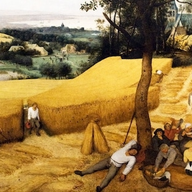
Scarcity
Once, argues Nicholas Xenos ( Scarcity and Modernity ), “scarcity” did not exist. What existed with “scarcities,” or “periods of scarcity.” He writes, “Of medieval origin, ‘scarcity’ derives from the Old Northern French escarcete . Its original usage denoted an insufficiency of supply, and by the fifteenth century the word…

Between Garden and City
Andrew Kuiper offers a superb, exhilarating summary of Sergei Bulgakov’s Philosophy of Economy . Kuiper begins by summarizing Bulgakov’s case against “economism,” the assumption shared by free marketeers and Marxists that human beings are motivated above all by economic drives. For both, man is homo economicus . Bulgakov had read…
In Medias Res
Your weekly digest for all things Theopolis.