Cobbling together some notes for a lecture series, I was reminded of Seamus Heaney's little poem, " Anahorish ."
The Gaelic name means “place of clear water,” as the first line indicates, and the etymology suggests a place of purity and innocence.
Anahorish was near Heaney’s childhood home in County Derry, and its association with his childhood modulates into an association with the childhood of the world.
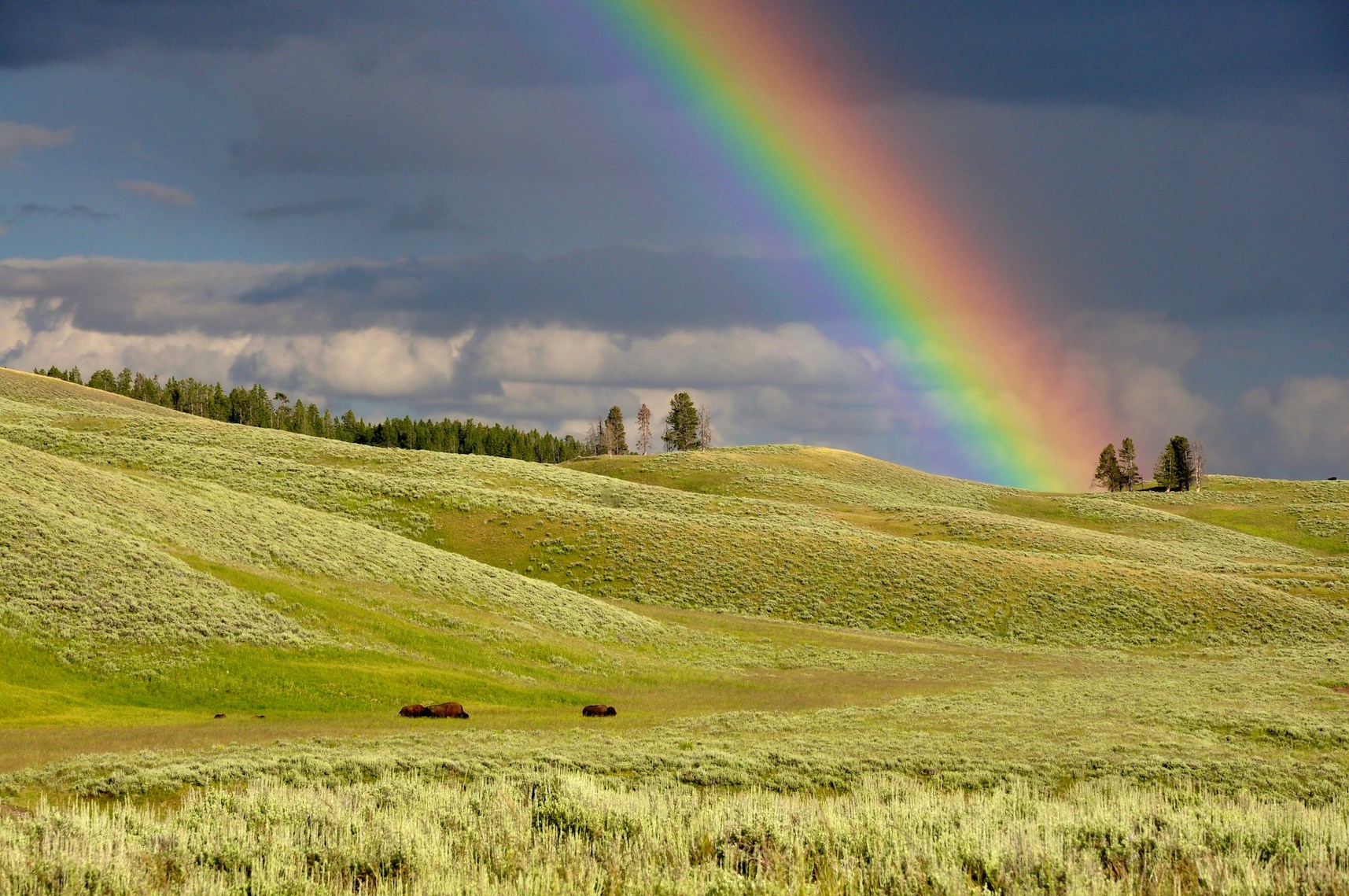
It's not merely his first hill, but “the first hill of the world.” There the water is “clear” and the grass “shiny” in the sun.
As the poem moves, the clear water of Eden and childhood grows cloudy, and instead of washing down to the cobbles it freezes in the well and needs to be broken up.
We begin with running water, and end with ice. We begin with clear water, and end with dunghills. We begin with life, and end with the refuse of life. Anahorish enters a wintry world, not the spring.
In between, Heaney puns on “barrows,” describing the wheel barrows going through the yards on winter evenings, but evoking also the mound-barrows in which Vikings are buried.
The people of Anahorish are mound dwellers not only because they live on the hill but because they are nearly as dead as their ancestors in the barrows.
Heaney’s meditation includes an interest in its actual shape, the letters that constitute it. Anahorish – the word – is a landscape, a “soft gradient/ of consonant” with its purring n and h and r and its final whispering (perhaps watery) “sh,” as well as a “vowel-meadow” of a’s, o, and i.
If the “gradient” is a slope in the road, Heaney is thinking of the name as a union of meadow and highway, of nature and culture, as well as of consonants and vowels.
Beyond what Heaney actually says about the word, the way he says it is notable. With a nod to the alliterative verse of Anglo-Saxon poetry (Heaney much later translated Beowulf ), Heaney uses the kenning “vowel-meadow” to describe the word.
Merely by using the form, Heaney discloses yet another historical layer to the place, for Anahorish was perhaps once a place where bards sang, on the “first hill in the world.”
A miracle in twelve simple lines.
Peter Leithart
Peter J. Leithart is President of Theopolis Institute. He is the author of numerous books on theology, literature, and culture, including Theopolitan, Defending Constantine, and Baptized Body.
More from Poetry
Continue reading related articles
For Easy Poetry
"Once upon a time," writes Anthony Madrid , "there were two traditions in Anglophone poetry. On the one hand, there was poetry that was completely easy to understand and whose elegance depended on translucent phrases and straightforward sentiments. On the other hand, there was the hard stuff: poetry where the…
Butterfly Center
My grandson screams and runs away from a butterfly, flutterflower, wings fine as petals. The butterfly, gentlest creature, flies on, perhaps abashed, perhaps, feeling manly for having made a child cry, to pick a fight with a Monarch.
Poetic Apocalypse
C hristian Wiman ( My Bright Abyss , 51-2) claims that some poets—“surprisingly few”—possess “a very particular gift for making a thing at once shine forth in its ‘thingness' and ramify beyond its own dimensions.” He sites several lines from Norman MacCaig: “Straws like tame lightnings lie about the grass…
In Medias Res
Your weekly digest for all things Theopolis.