
Alexander Nazaryan writes with discomfiting honesty about how his own failure at novel-writing and envy of published novelists has affected his book reviewing:
“I had started reviewing books, a dangerous occupation for an aspiring novelist, sort of like inviting an arsonist to join the fire department. As my own rejection letters piled up, it became unbearable to stomach the notion that others — many of whom seemed, from their biographies, to have sacrificed much less than I had — were being celebrated while I lurked in the byways of the literary world.
“Consequently, the reviews I wrote came to bear a stench of bitterness, none more so than one I wrote for the Village Voice in 2008 in which I took on two debut novelists, Keith Gessen and Nathaniel Rich. After comparing them to James Joyce and Ralph Ellison, I proceed to snidely savage their work. It is true: I did not like their novels. But my dislike was set aflame by jealousy of young men whose profiles were similar to mine and who had managed to do what I had not.”
He knows he would be a healthier human being if he just gave up his hopes of publishing a novel: “But I cannot do it, and not even failure can check me.”
Peter Leithart
Peter J. Leithart is President of Theopolis Institute. He is the author of numerous books on theology, literature, and culture, including Theopolitan, Defending Constantine, and Baptized Body.
More from Literature
Continue reading related articles
God's Plenty
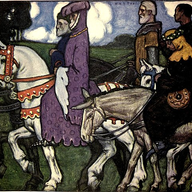
A few thoughts on the “General Prologue” to Chaucer’s Canterbury Tales . 1) The Prologue sets the stage for a multi-layered set of tales. The real-life Chaucer is, of course, the author, but in the Prologue, he introduces a fictional version of himself as narrator: It happened in that season…
Violence as Poetry
Paul and Jane Sinclair, protagonists of J.G. Ballard’s 2000 novel Super-Cannes , move from England to the French Riviera to live at a new high-tech business park, Eden-Olympia (!), after Jane’s friend and former lover, Dr. David Greenwood, goes on a killing spree that ends with suicide. Jane, a pediatrician,…

Memento Mori
Virtually all the characters in Muriel Spark’s 1959 novel, Memento Mori , are over 70. They suffer the physical humiliations of aging and the pains of regret. Unexpectedly, hilariously, they’re as competitive and petty as schoolchildren. Well into his 80s, Godfrey Colston scorns the crippled critic Guy Leets for the…
In Medias Res
Your weekly digest for all things Theopolis.