
CS Lewis said that the courtly love tradition arose from “Ovid misunderstood.” Medieval soteriology might be said to have arisen from “Augustine misunderstood.” Everyone was Augustinian and no one wanted to be Pelagian, but Augustine’s actual teaching was confused by transmission problems both of his own works and of conciliar endorsements of his doctrine. McGrath notes that the strongly Augustinian Council of Orange (529) remained virtually unknown between the 10th and 16th centuries, and Pelagian works and even one of Pelagius’s own works (!) circulated under Augustine’s name. This provides important background to the Reformation contests over Augustine’s legacy.
Peter Leithart
Peter J. Leithart is President of Theopolis Institute. He is the author of numerous books on theology, literature, and culture, including Theopolitan, Defending Constantine, and Baptized Body.
More from History
Continue reading related articles

Realness of Things Past
Greg Anderson began thinking about the thesis of his Realness of Things Past while working on a book on the “state” in classical Greece. He discovered there was no such thing as an Athenian “state,” and that conclusion led him to question the way historians do history. Instead of running…

The Power of the Margins
David Martin (1929-2019) was a secularization skeptic. He acknowledged that modern societies typically undergo a process of "differentiation," in which various sectors of social and political life free themselves from the oversight of religious authority. He acknowledged that in many modern societies religious institutions and values are "marginalized." But he…
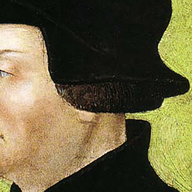
Zwinglian Symbolism
Nathan Mitchell (writing in the Oxford History of Christian Worship , 324) denies that Zwingli taught a "mere symbolist" according to which the Supper "simply served to remind believers of the great benefits bestowed on them through Christ's passion and death." Zwingli wasn't a symbolist "in any modern sense." Mitchell…
In Medias Res
Your weekly digest for all things Theopolis.