
O’Donovan makes the point, against Markus, that Augustine does not describe the earthly city as a combination of private ends and public or common utility. This would be a secular system, which leaves ends to individual citizens as they make use of common goods.
O’Donovan says Augustine does something like the opposite: There is a common end for all men in the earthly city, and no proper utilitas at all, since utilitas has to do with referring the use of goods of this world to the supreme good of eternal life. There is no diversity of ends in the earthly city, but a tragically, demonically unified end of self-service. This is why Augustine removes utilitas from his definition of the commonwealth.
Peter Leithart
Peter J. Leithart is President of Theopolis Institute. He is the author of numerous books on theology, literature, and culture, including Theopolitan, Defending Constantine, and Baptized Body.
More from Uncategorized
Continue reading related articles

Cautions About Conversion
Wisdom from my old friend and colleague, Rev. Rich Bledsoe, on conversion . People "meet" Jim Jordan, and have the bracing thrill of escaping the flatness of just living and being in the 21st century. They might take off to the thrilling different world of Eastern Orthodoxy. They experience the…
Spousal Body
John Paul II ( Man and Woman He Created Them: A Theology Of The Body , 181-5) argues from Genesis that “‘alone,’ the man does not completely realize [his] essence.” Without the woman, Adam does not possess the “basic conditions that make it possible to exist in a relation of…
At the Right Hand
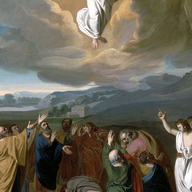
Forty days after Jesus rose from the dead, He ascended into heaven to take His place at the right hand of the Father (Acts 1:3), fulfilling the promise of Psalm 110. The Psalm is patterned as three sets of seven clauses. Verses 1-2 make up the first sequence, verses 3-4…
In Medias Res
Your weekly digest for all things Theopolis.