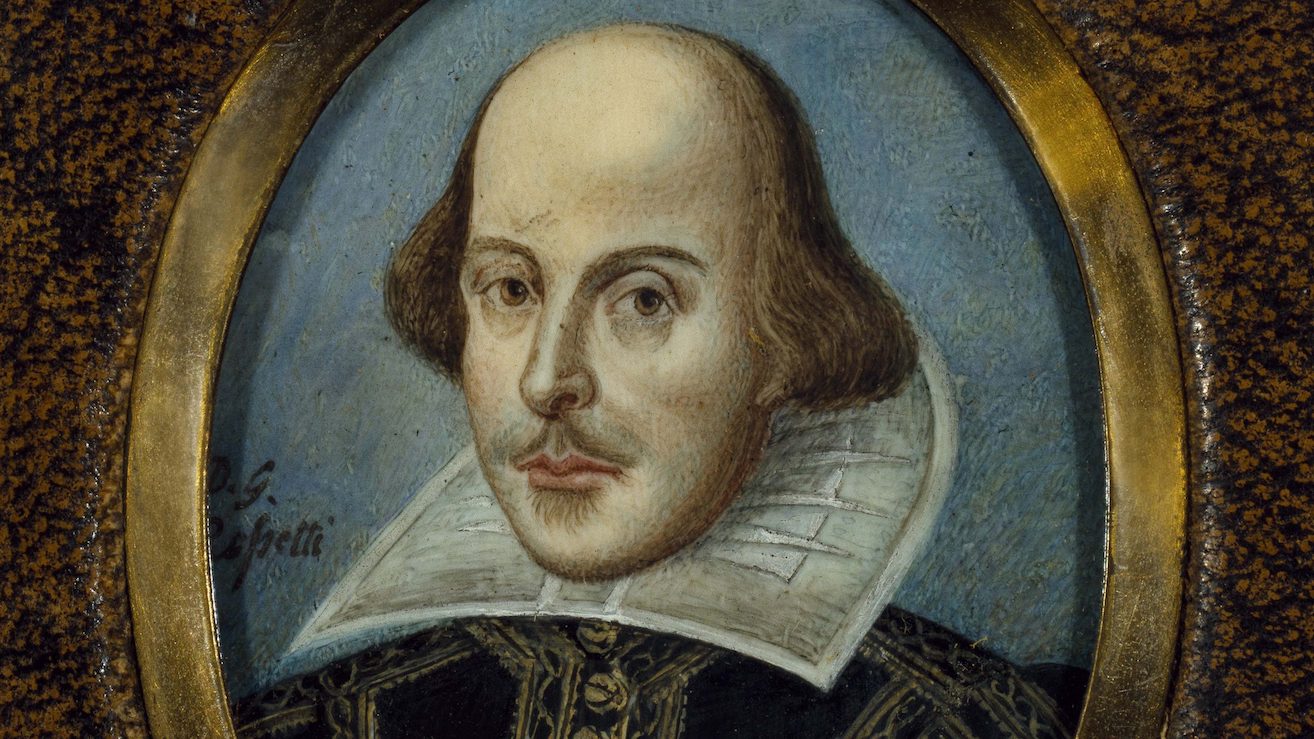
Howard White traces out a bit of Bacon’s lineage as a political philosopher:
“Young Hobbes had accompanied Bacon on some of his walks, and Bacon delighted in his company. And Hobbes was to establish a system of political philosophy on principles of motion, precisely as Bacon ahd urged, taking his bearing by human appetites and desires.” While “Bacon would have considered Hobbes’ effort premature,” Hobbes’ formulation of two maxims of human nature - the concuspicible, desire for appropriation; the rational, avoiding dissolution - had strong “affinity with Bacon’s natural appetite and natural repugnance.”
Rousseau, for his pat, claimed that “perhaps the greatest philosopher who ever lived was Lord Chancellor of England.” Rousseau was not an admirer of Hobbes, nor was he interested in the dissemination of science, but he considered Bacon exalted: his “eage spirit soared.” Like Bacon Rousseau saw himself as “a voluntary outcast,” exiled and hoping for the appearance of Prometheus. But “the dependence of Rousseau on Bacon is by no means confined to the striking simliarity in the role of the philosopher or the solitary promeneur. In his discussion of civil religion, Rousseau acknowledges that only Hobbes has seen the necessity to unite church and state under political control. In this, however, Hobbes followed Bacon and, indeed, Machiavelli, as Rousseau certainly knew. Rousseau’s own civil religion, with men living in peace, yet capable of uniting ruthlessly against the enemies of their civil religion, bears a close correspondence to that of Bacon.”
Peter Leithart
Peter J. Leithart is President of Theopolis Institute. He is the author of numerous books on theology, literature, and culture, including Theopolitan, Defending Constantine, and Baptized Body.
More from History
Continue reading related articles
Realness of Things Past
Greg Anderson began thinking about the thesis of his Realness of Things Past while working on a book on the “state” in classical Greece. He discovered there was no such thing as an Athenian “state,” and that conclusion led him to question the way historians do history. Instead of running…

The Power of the Margins
David Martin (1929-2019) was a secularization skeptic. He acknowledged that modern societies typically undergo a process of "differentiation," in which various sectors of social and political life free themselves from the oversight of religious authority. He acknowledged that in many modern societies religious institutions and values are "marginalized." But he…
Zwinglian Symbolism
Nathan Mitchell (writing in the Oxford History of Christian Worship , 324) denies that Zwingli taught a "mere symbolist" according to which the Supper "simply served to remind believers of the great benefits bestowed on them through Christ's passion and death." Zwingli wasn't a symbolist "in any modern sense." Mitchell…
In Medias Res
Your weekly digest for all things Theopolis.