
Here’s the same problem elsewhere in Barth (again relying on Hunsinger’s treatment):
This encounter with God, he argued, was mediated, not immediate, and was given by grace, not by nature. The encounter was objectively mediated by Jesus Christ, and given only by the free decision of God. The condition for its possibility was thus extrinsic, not intrinsic, to human nature ( How to Read Karl Barth , p. 40).
Here, the problem again is Barth’s doctrine of creation. Despite his hostility to natural revelation, and implicitly to an idea of nature having an autonomy, this is precisely what he ends up with. If humanity or human nature is always already grace and gift, then the whole problem dissolves. Insofar as Barth failed to posit creation as grace, he actually grants considerable autonomy to nature, such that “nature” does not always already possess its reality only in and as encounter with God.
Again, perhaps poorly stated, but I see this nature/grace scheme running along everywhere in Barth, with massive problems resulting. Even while he attacks the scholastics for granting autonomy to nature (some innate capacity for human response residing in human nature) he has granted a far more wide-ranging and fundamental autonomy to nature (because human nature exists but has no innate relationship with God).
Peter Leithart
Peter J. Leithart is President of Theopolis Institute. He is the author of numerous books on theology, literature, and culture, including Theopolitan, Defending Constantine, and Baptized Body.
More from Theology
Continue reading related articles
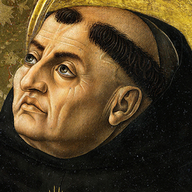
In Praise of Thomas
Gotta love ol’ Tommaso d’Aquino, a.k.a. Thomas Aquinas. The margins of my various copies of his works are full of notes of disagreement and question marks, but still: His toss-off arguments are usually deeper than the sustained arguments of lesser theologians. Here’s a pot pourri from the early part of…
Hoping For Love
In his 2007 encyclical on hope, Spe Salvi , Pope Emeritus Benedict XVI observes that the experience of loving and being loved is a moment of “redemption.” Love gives new meaning, new joy, new energy. Every love is a new birth. We long and hope for love. We want it…
Is All That's In God God?
Divine simplicity is often summarized in the axiom, "All that's in God is God." If this is taken at face value, though, it conflicts with Trinitarian orthodoxy. 1) By this axiom, the Persons are identical with the essence of God. 2) But the Persons have (or are) identifying particularities or…
In Medias Res
Your weekly digest for all things Theopolis.