
Carlos Eire argues (in John Calvin and Roman Catholicism ) that Calvin develops a secular account of the rise of religion. Unlike Augustine and the Catholic tradition, Calvin locates the source of false religion in the human imagination, and leaves demonic activity completely out of the picture. As an early “armchair ethnologist,” Calvin paved the way for Enlightenment theories of religion:
“by observing Catholics as ‘others’ and by objectifying their religion as a purely natural, socially constructed figment of their imaginations, Calvin began to divorce religion from the supernatural, and to cast doubt on the possibility that religion per se always connects human beings to some numinous dimension. Banning the devil from the scene heightened human responsibility too, and made religion seem even more illusory and less connected to the world of spirit, even a mere figment of the darkest recesses of the human mind and heart. Further steps would have to be taken to dismiss all religion as ‘false’ and call it a delusion, along with the very idea of God, but Calvin opened that steep train of doubt, so to speak.” Eire places Calvin in a genealogy that leads through Vico, Hume, and de la Mettrie to Durkheim, Malinowski, and van Gennep.
Peter Leithart
Peter J. Leithart is President of Theopolis Institute. He is the author of numerous books on theology, literature, and culture, including Theopolitan, Defending Constantine, and Baptized Body.
More from Uncategorized
Continue reading related articles
Cautions About Conversion
Wisdom from my old friend and colleague, Rev. Rich Bledsoe, on conversion . People "meet" Jim Jordan, and have the bracing thrill of escaping the flatness of just living and being in the 21st century. They might take off to the thrilling different world of Eastern Orthodoxy. They experience the…
Spousal Body
John Paul II ( Man and Woman He Created Them: A Theology Of The Body , 181-5) argues from Genesis that “‘alone,’ the man does not completely realize [his] essence.” Without the woman, Adam does not possess the “basic conditions that make it possible to exist in a relation of…
At the Right Hand
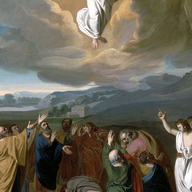
Forty days after Jesus rose from the dead, He ascended into heaven to take His place at the right hand of the Father (Acts 1:3), fulfilling the promise of Psalm 110. The Psalm is patterned as three sets of seven clauses. Verses 1-2 make up the first sequence, verses 3-4…
In Medias Res
Your weekly digest for all things Theopolis.