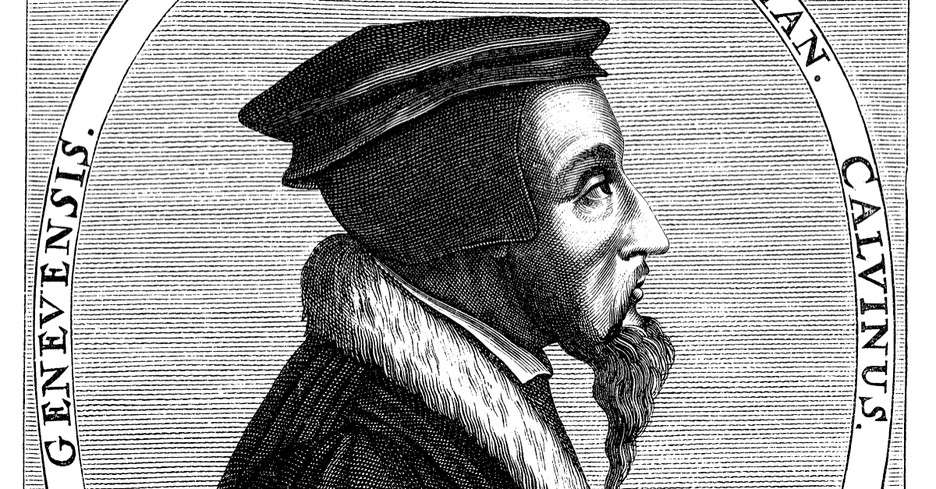
Some impressive quotations from Muller’s Christ and the Decree (p. 36):
This is Calvin ( Inst 2.12.1):
In discerning Christ’s merit, we do not consider the beginning of merit to be in him, but we go back to God’s ordinance as the first cause. For God solely of his own good pleasure appointed him mediator to obtain salvation for us.
And this from Muller:
In this crucial link between his Christology and the larger soteriological exposition Calvin does not rest on his own exegesis for authority. The central points in the argument are given not in his own words but in those of Augustine . . . . Augustine says that not only predestination but grace is manifested most clearly in the man Jesus. Christ is elect through grace and “through no preceding merits of works or of faith.” The humanity of Christ is the highest example of the resounding sola gratia of divine election. For this reason the active obedience of Christ is for the sake of man’s salvation, rather than for the sake of Jesus’ worthiness. Christ’s merits are certainly not intended to make his human nature worthy of exaltation to the right hand of the Father!
Peter Leithart
Peter J. Leithart is President of Theopolis Institute. He is the author of numerous books on theology, literature, and culture, including Theopolitan, Defending Constantine, and Baptized Body.
More from Christology
Continue reading related articles
Christmas Retunes Creation
Angels were certainly not unknown to Israel, and the entire history of Israel occurred under angelic oversight. But nowhere in the Bible is there a cluster of angelic appearances like we find at the beginning of the gospel story. An angel appears to Joseph to tell him to take Mary…
God Become Baby
This article was first published at Firstthings.com on December 4, 2015 . The Gospels obviously tell the life story of a human being. Jesus was born. He lived in subjection to his parents, grew up, learned a trade, made friends and enemies, walked the dusty roads of Judea, climbed mountains,…
Ontology of Incarnation
What are the general ontological foundations of the incarnation? asks Sergius Bulgakov in a dense paragraph of The Lamb of God (171-2). “In what does the inexorable predeterminedness of the Incarnation consist?” Negatively, he writes, it’s “erroneous to limit the theology of the incarnation to soteriology.” The incarnation isn’t merely…
In Medias Res
Your weekly digest for all things Theopolis.