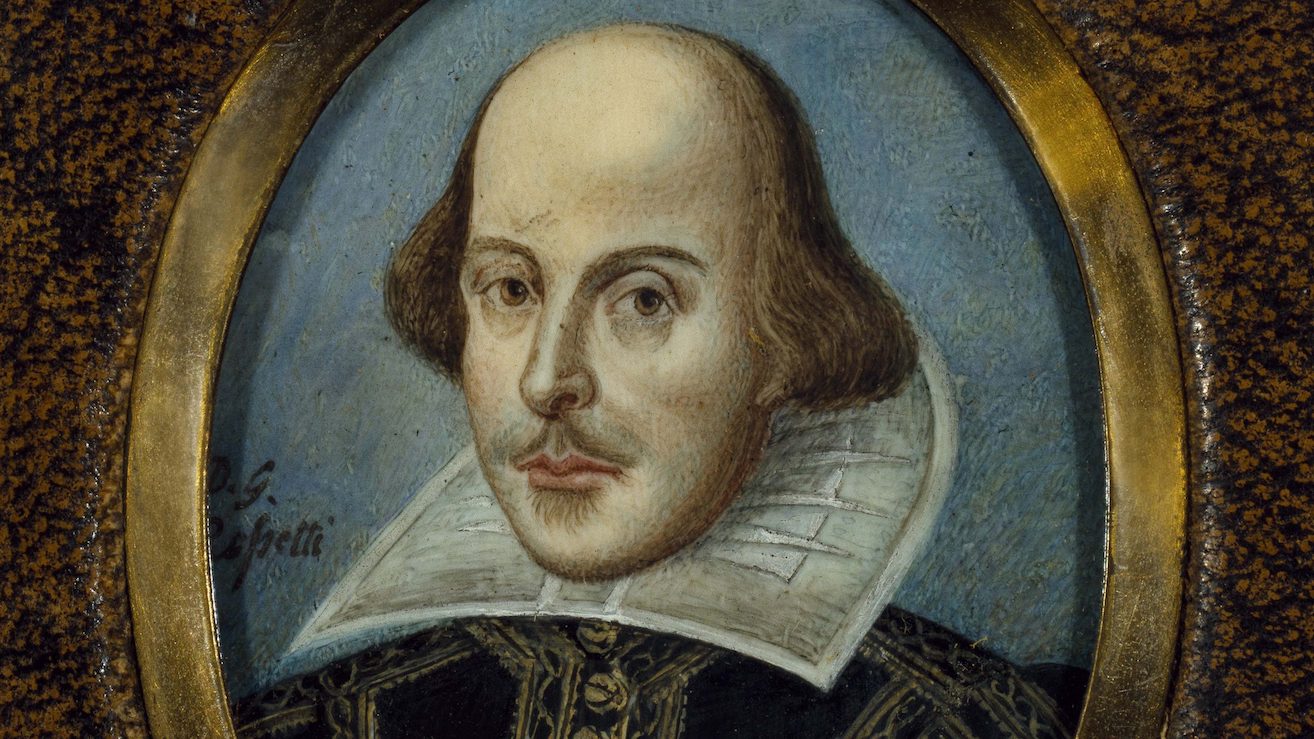
Robert Louis Wilken has a very fine piece on the “church’s way of speaking” in the Aug/Sept issue of First Things. He points out that the church’s faith is not merely “doctrinal propositions, creedal affirmations, and moral codes” but “a world of discourse that comes to us in language of a particular sort.” Further, “Christian speech is not primarily the technical vocabulary of Christian doctrine” but “the language of the Psalms, the stories of the patriarchs, the parables of the gospels, the moral vocabulary of St Paul’s epistles.” When we employ the church’s speech, drawn from Scripture, “we learn to live together as a community, to breathe in harmony. We learn to think the Church’s thoughts, share its loves, and live by its precepts.” As a city, the church has its own language that marks it from other cities: “And, like a city, the Church draws its citizens into a shared public life, one marked by its central cultic activity, the Eucharist, and by other rituals, such as Ash Wednesday, Palm Sunday, and Corpus Christi. The Christian society has its own calendar that sets the rhythms of the community’s life, offices, institutions, laws, architecture, art, and music, its own customs and mores, history and memory.” (OK, I was with him except for Corpus Christi.)
Peter Leithart
Peter J. Leithart is President of Theopolis Institute. He is the author of numerous books on theology, literature, and culture, including Theopolitan, Defending Constantine, and Baptized Body.
More from Theology
Continue reading related articles
In Praise of Thomas
Gotta love ol’ Tommaso d’Aquino, a.k.a. Thomas Aquinas. The margins of my various copies of his works are full of notes of disagreement and question marks, but still: His toss-off arguments are usually deeper than the sustained arguments of lesser theologians. Here’s a pot pourri from the early part of…
Hoping For Love
In his 2007 encyclical on hope, Spe Salvi , Pope Emeritus Benedict XVI observes that the experience of loving and being loved is a moment of “redemption.” Love gives new meaning, new joy, new energy. Every love is a new birth. We long and hope for love. We want it…
Is All That's In God God?
Divine simplicity is often summarized in the axiom, "All that's in God is God." If this is taken at face value, though, it conflicts with Trinitarian orthodoxy. 1) By this axiom, the Persons are identical with the essence of God. 2) But the Persons have (or are) identifying particularities or…
In Medias Res
Your weekly digest for all things Theopolis.