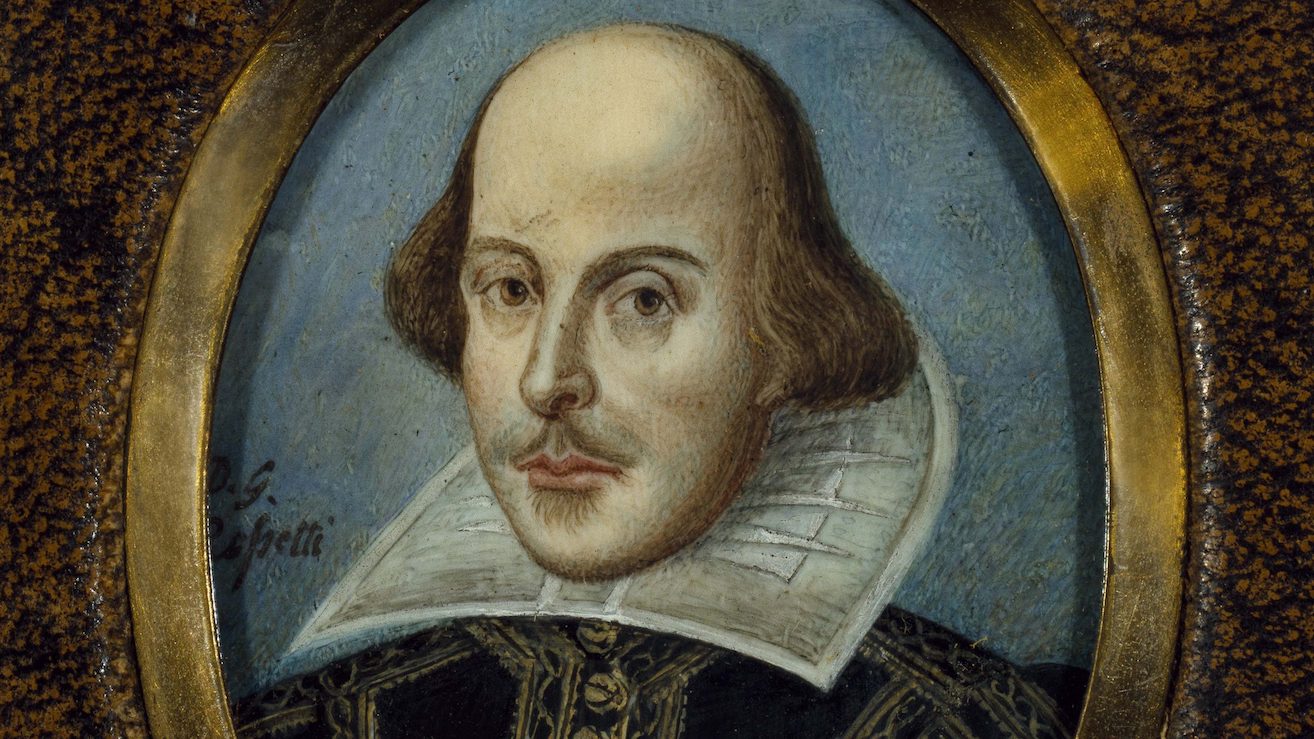
The following is an abstract for a conference paper that I will be presenting in January 2005.
Church history has often been regarded by the professional historians as a quaint hagiographic outpost for the pious. Globalization, along with developments within the historical profession, suggest that the time is propitious for church historians to assume the center. In his acclaimed The Birth of the Modern World, 1780-1914 , C. A. Bayly claims that ?it is no longer really possible to write ?European?Eor ?American?Ehistory in a narrow sense,?Esince even ?local, national, or regional histories must, in important ways . . . be global histories.?E Global history, however, faces not only the postmodern challenge that global history is complicit with global structures of oppression but also the more practical question of what the object of a global study might be. Is global history the history of global institutions? Is it the composite history comprised of local histories? How can myriads of local histories become subplots of a global history without doing violence to the locals? Is there any historical entity of sufficient reach to provide a unified subject-matter for a global history?
If postmodern and postcolonial thought challenges global history in general, it also offers an opportunity to the church historian. To say that the story of history is the story of Christ?s church is to make a profession of faith, but postmodernism has taught us that everyone who claims to discern a narrative shape in history is making a profession of faith, an ungrounded wager on meaning.
From both perspectives, the current intellectual climate offers an opportunity for church historians to press claim that the church is the historical entity at the center of global history. Bayly?s work demonstrates that even the modern history of world religions might be seen as part of church history. He writes, ?It has always been clear that Judaism, Islam, Hinduism, and Buddhism reformulated themselves partly in response to vigorous missionary assault from Christians in the age of European empires,?Eand adds later that Asian religions in particular responded to Christian missionary efforts by adopting the ?missionaries?Emethods of preaching and evangelism.?E As a result, ?they became proselytizing religions for the first time.?E The church thus had an important role in shaping its competitors in the global religious marketplace.
Popular church historians in particular have an historic opportunity to bring church history out of the ghetto, and tell the story of the church as global history.
Peter Leithart
Peter J. Leithart is President of Theopolis Institute. He is the author of numerous books on theology, literature, and culture, including Theopolitan, Defending Constantine, and Baptized Body.
More from History
Continue reading related articles
Realness of Things Past
Greg Anderson began thinking about the thesis of his Realness of Things Past while working on a book on the “state” in classical Greece. He discovered there was no such thing as an Athenian “state,” and that conclusion led him to question the way historians do history. Instead of running…
The Power of the Margins
David Martin (1929-2019) was a secularization skeptic. He acknowledged that modern societies typically undergo a process of "differentiation," in which various sectors of social and political life free themselves from the oversight of religious authority. He acknowledged that in many modern societies religious institutions and values are "marginalized." But he…
Zwinglian Symbolism
Nathan Mitchell (writing in the Oxford History of Christian Worship , 324) denies that Zwingli taught a "mere symbolist" according to which the Supper "simply served to remind believers of the great benefits bestowed on them through Christ's passion and death." Zwingli wasn't a symbolist "in any modern sense." Mitchell…
In Medias Res
Your weekly digest for all things Theopolis.