
Kinneging points out the ambiguous relationship that traditional conservatism has often had with the market: “No conservative will deny that a system of mutual provision of services, based on a range of evil affects residing within man - which are further inflamed by the unrestricted operation of that system - ‘works,’ in the sense that it maximized utility.  Unlike critics from the left, conservatives do not believe that the market fails when measured by its own standard of success: utility maximization.  Conservative criticism is not about whether the market lives up to its promises, but whether the market’s promises are necessarily beneficial.  Desire - or ‘preferences,’ as they are not called - are a fundamental principle of the market that is not open to question in the market philosophy.  To conservatives, on the other hand, desires are the core of the problem.  To be sure, many conservatives are strong advocates of the market economy, beginning with Burke.  But conservatism, unlike many market liberals, are also well aware of the limitations and dangers of the market.”
Peter Leithart
Peter J. Leithart is President of Theopolis Institute. He is the author of numerous books on theology, literature, and culture, including Theopolitan, Defending Constantine, and Baptized Body.
More from Economics
Continue reading related articles
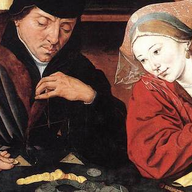
Politics of Price
What determines prices? Supply and demand, says anyone with a modicum of training in economics. Right, says Barry C. Lynn ( Cornered ): "In any open market that is populated by many small buyers and many small sellers, if the producers try to raise their prices high enough to make…
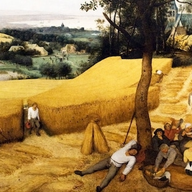
Scarcity
Once, argues Nicholas Xenos ( Scarcity and Modernity ), “scarcity” did not exist. What existed with “scarcities,” or “periods of scarcity.” He writes, “Of medieval origin, ‘scarcity’ derives from the Old Northern French escarcete . Its original usage denoted an insufficiency of supply, and by the fifteenth century the word…
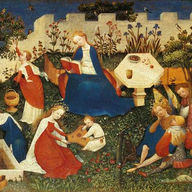
Between Garden and City
Andrew Kuiper offers a superb, exhilarating summary of Sergei Bulgakov’s Philosophy of Economy . Kuiper begins by summarizing Bulgakov’s case against “economism,” the assumption shared by free marketeers and Marxists that human beings are motivated above all by economic drives. For both, man is homo economicus . Bulgakov had read…
In Medias Res
Your weekly digest for all things Theopolis.