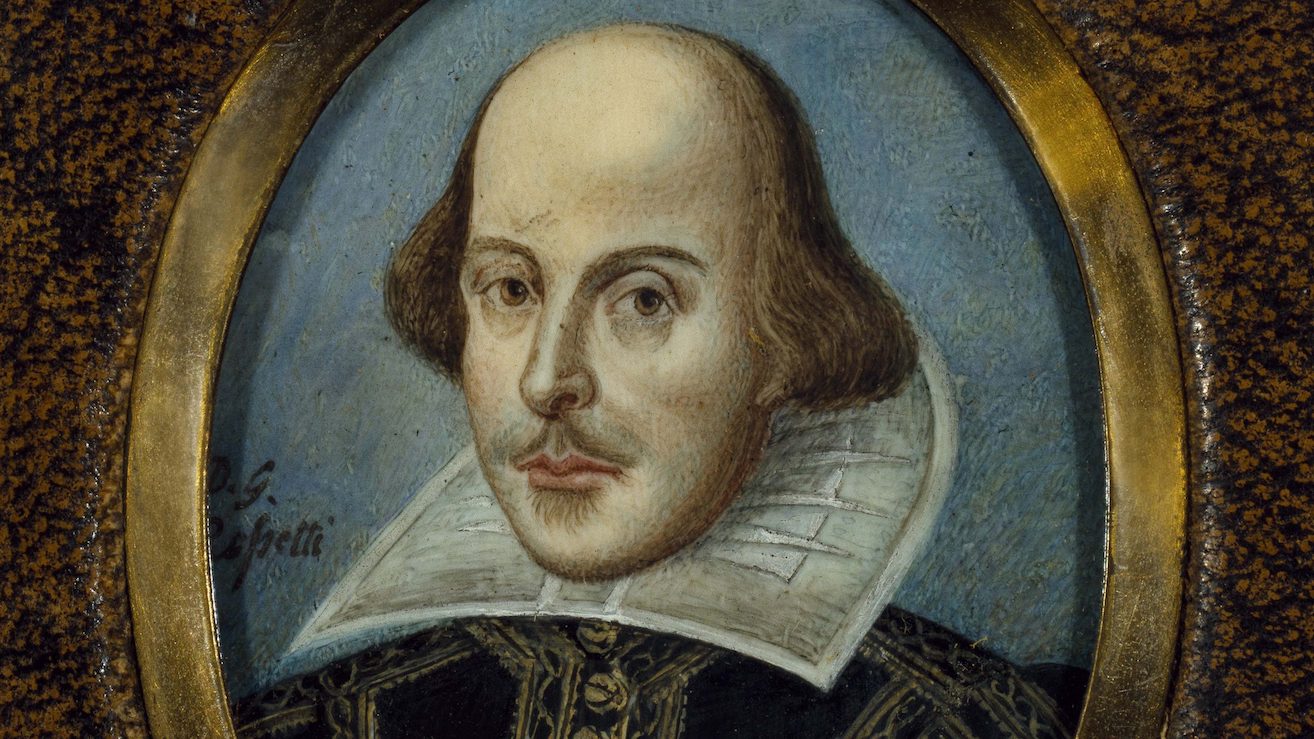
Terry Eagleton ( Culture and the Death of God ) observes that culture was once considered the solution to the twentieth century's loss of religion. The ambiguity of “culture” - its “aesthetic” elite meaning and its popular “anthropological” meaning - was exploited to serve political ends. TS Eliot understood that religion could be both mythology (for the masses) and theology (for the elite), and culture followed this same bifurcation: “There is a distinction at work here between the conscious and the unconscious, as the truths articulated by the intelligentsia are lived out as spontaneous habit and unreflective custom by the common people. The same values are shared by both groups but at different levels of awareness. Spiritual hierarchy can thus be reconciled with a common culture” (121).
Eagleton sees a similar dual meaning in Matthew Arnold's Culture and Anarchy (1869), which Eagleton claims is more aptly titled “Culture or Anarchy.” Culture was to be a “bulwark against social unrest.” Arnold's essay “seeks to bring the aesthetic version of culture to bear on the sociological one, at a moment when the class struggle in Victorian England is sharpening” (124). For all the vacuity of Arnold's descriptions of culture (“sweetness and light”), it has a “practical, corporate and reformative” force: “If it is to replace religion, which is really Arnold's goal, it must descend from its ethereal heights to become a militant social mission” (128). It has to moderate “middle-class rapacity and working-class rancor” (129).
More recently, Eagleton points out, culture has become part of the problem. Despite the potential for the “culture industry” to fulfill the hope for mass mythology (think of the mass mythology of film), culture has failed to provide the unifying symbolic world once occupied by religion: “If the Enlightenment had failed to oust religious faith, and the Idealists and Romantics had failed to secularize it, the concept of culture proved too fraught and elusive to serve as a stopgap. It was clear that there could be no salvation in aesthetic culture alone. It was too minority a pursuit for that. Yet neither could one place any great hope for redemption in the idea of culture as a whole form of life. There are no whole forms of life. Human societies are manifold and contentious. Culture is more likely to reflect social divisions than to reconcile them. Once those contentions begin to infiltrate the concept of culture itself - once value, language, symbol, kinship, heritage, identity and community become politically charged - culture ceases to be part of the solution and instead becomes part of the problem. It can no longer present itself as a corporate alternative to one-sided interests. Instead, it shifts from a bogus transcendence to a militant particularism. This, in effect, has been the fate of culture under postmodernism” (122).
Peter Leithart
Peter J. Leithart is President of Theopolis Institute. He is the author of numerous books on theology, literature, and culture, including Theopolitan, Defending Constantine, and Baptized Body.
More from Culture
Continue reading related articles

Free Speech
Free speech is a fundamental value of liberal politics, an expression of John Stuart Mill's promise that we can do and say anything , so long as we do no harm. It's a false promise. Absolute free speech was always a ruse. Speech has never been entirely free. It can't…

Charlie Kirk’s Memorial
I watched only snippets of the Charlie Kirk memorial, but I'm overwhelmed with gratitude to God. No living person, I suspect, has seen so many high public officials testify so clearly to the gospel of Jesus Christ. I am grateful for Tucker Carlson's exhortation to repent, starting with me .…
Pauline Equality
“The religion of our time,” says the writer known as Bronze Age Pervert , “is the unquestioned and absolute worship of human equality.” That may not be the religion, but it’s certainly one of them, and one that threatens to dissolve the moral and social distinctions and hierarchies on which…
In Medias Res
Your weekly digest for all things Theopolis.