
Gerald Schlabach notes that critiques of Constantinianism pose temptations of various sorts, just as Constantinianism itself does. Insofar as such critiques posit a “fall” for the church, “they tend to be dysfunctional - not just for ecumenical debate, but also for ethical discernment within those churches that historically have defined themselves over against some ‘fallen’ mainstream Christianity.”
His point is that the “Deuteronomic” temptation to forget God in the land is a prior and more fundamental temptation, one that tempts anti-Constantinians as much as Constantinians.
Deuteronomy shows us that God’s good gift itself is the “most important occasion for temptation,” and given that, one “can never assume an inexorable link between some present unfaithfulness or moral dilemma and some prior theological mistakes or ethical blunders.” It would be a mistake to assume that all theology done in a Constantinian church is wrong: “Some positions that nonpacifist ‘Constantinian’ churches have taken historically are surely convertible, yet still represent efforts to respond to the right problems.”
More sharply, “peace churches” cannot “expect their critique to be credible if they bring a principled suspicion to all institution-building, or to all exercise of authority by leaders called to focus communal life, or to all forms of discipline. If the only alternative that peace churches, free churches, and other reform movements within Christianity have to offer is a perpetual starting over with primitive forms of face-to-face community, then they are admitting that they really have no idea how to live long in the land that God would give them. And they should not be surprised if mainstream ‘Constantinian’ Christians dismiss their witness as little more than an effort to avoid the most basic problem of Christian social ethics.”
Peter Leithart
Peter J. Leithart is President of Theopolis Institute. He is the author of numerous books on theology, literature, and culture, including Theopolitan, Defending Constantine, and Baptized Body.
More from Politics
Continue reading related articles

Political Gospel
The gospel isn't an apolitical message that happens to have political implications. It’s not a message of private salvation with downstream public consequences. Exactly the opposite. The gospel is public and political truth with personal consequences. All the vocabulary of the gospel is political. The Greek word for “gospel” –…

When Idolaters Move In
What should Christians do if we discover there are idolaters living down the street? Lots of tangles in the question. For better or worse, the U.S. Constitution guarantees freedom of religion. We can debate whether or not the Framers intended the Constitution to protect Hindus and Muslims. In actual legal…
Free Speech
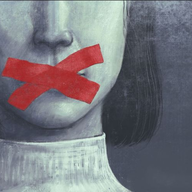
Free speech is a fundamental value of liberal politics, an expression of John Stuart Mill's promise that we can do and say anything , so long as we do no harm. It's a false promise. Absolute free speech was always a ruse. Speech has never been entirely free. It can't…
In Medias Res
Your weekly digest for all things Theopolis.