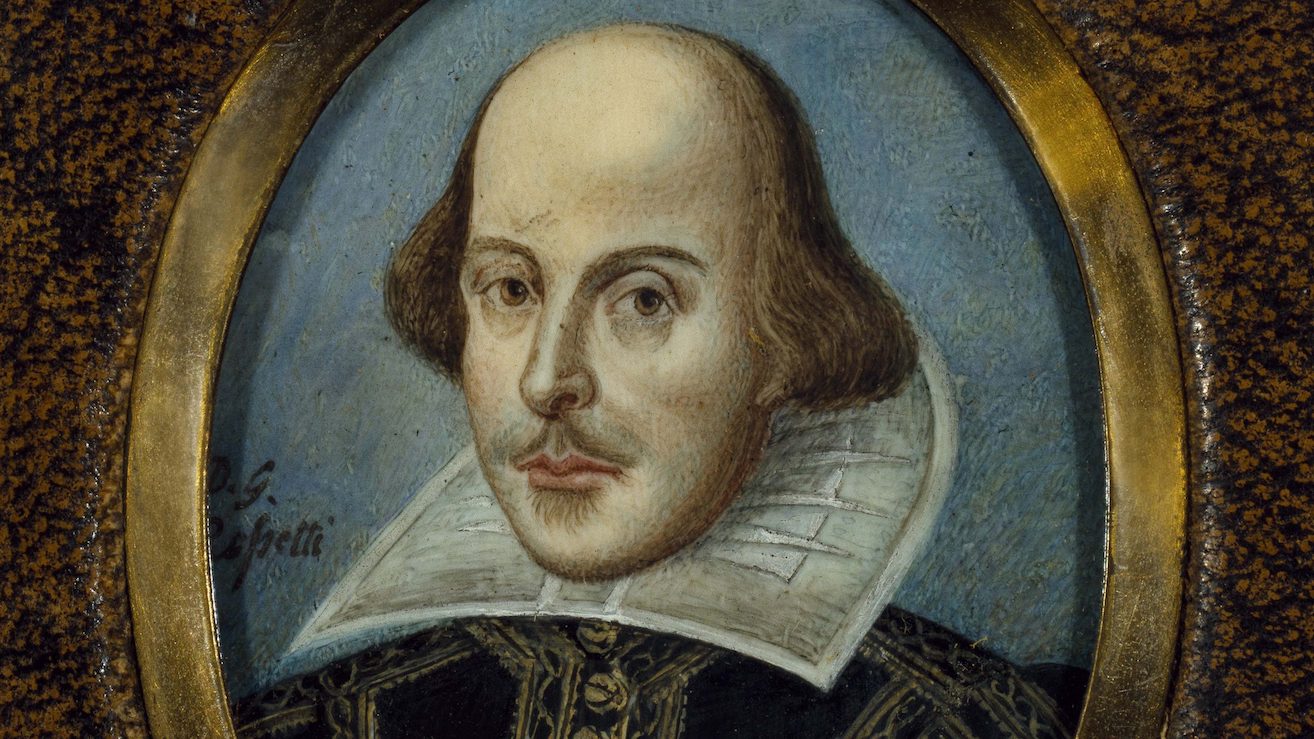
As I’ve thought more about the issues of comedy and tragedy, it has become clear that Christianity not only brings “deep comedy,” but also produces a deepening of tragic sensibility. In one sense, Christianity is utterly opposed to tragedy and its outlook: the religious world of much tragedy with its fickle gods or its irrevocable fate, is diametrically opposed to Christian faith; tragedy’s claim that death reigns is a contradiction of the gospel; Christianity tells the story of history as a divine comedy not a human tragedy; and so on.
But in an important sense, precisely because Christianity brings boundless hope into the world, it also intensifies the sense of loss for those who do not achieve that hope (this is a point David Hart makes). If everyone’s life necessarily and in the nature of things moves toward death, if the world is designed for tragic outcomes, or if history is a perpetual slide toward oblivion, then tragedy is not a surprise or even particularly poignant. It’s just the way things are; get used to it.
In a world where resurrection has already begun, and where resurrection power is already operative, disastrous outcomes are no longer just in the nature of things, and this means disaster comes as an avoidable surprise. Lear’s demise, as Hart points out, is sad beyond Oedipus’s precisely because we have had a glimpse of the real possibility of resurrection.
For people who know no light, darkness is not seen as darkness; it’s just the medium in which vision works (or doesn’t). Once the light has come, darkness is shown to be utterly dark.
Peter Leithart
Peter J. Leithart is President of Theopolis Institute. He is the author of numerous books on theology, literature, and culture, including Theopolitan, Defending Constantine, and Baptized Body.
More from Literature
Continue reading related articles
God's Plenty
A few thoughts on the “General Prologue” to Chaucer’s Canterbury Tales . 1) The Prologue sets the stage for a multi-layered set of tales. The real-life Chaucer is, of course, the author, but in the Prologue, he introduces a fictional version of himself as narrator: It happened in that season…
Violence as Poetry
Paul and Jane Sinclair, protagonists of J.G. Ballard’s 2000 novel Super-Cannes , move from England to the French Riviera to live at a new high-tech business park, Eden-Olympia (!), after Jane’s friend and former lover, Dr. David Greenwood, goes on a killing spree that ends with suicide. Jane, a pediatrician,…

Memento Mori
Virtually all the characters in Muriel Spark’s 1959 novel, Memento Mori , are over 70. They suffer the physical humiliations of aging and the pains of regret. Unexpectedly, hilariously, they’re as competitive and petty as schoolchildren. Well into his 80s, Godfrey Colston scorns the crippled critic Guy Leets for the…
In Medias Res
Your weekly digest for all things Theopolis.