
Van Dam ( Roman Revolution of Constantine ) suggests that Eusebius’s Life was simultaneously a political tract celebrating the elevation of a Christian emperor and a theological apology promoting Eusebius’s Christological subordinationism. The afterlife of Eusebius’s treatise, though, put the emperors in their place.
Rufinus’s translation/paraphrase of Eusebius’s Church History includes material from the Life but presents Constantine as a devoutly Christian emperor from the beginning of his reign and emphasizes, in contrast to Eusebius’s tendency to conflate Jesus and Constantine, the emperor’s respect for bishops and his refusal to present himself as an equal of bishops. At the same time, Rufinus also promotes Nicene orthodoxy.
Socrates likewise downplays the parallels between Christ and emperor that Eusebius works into his account of the council of Nicea. He leaves out Eusebius’s description of Constantine’s arrival at the council “like a heavenly angel of God” and the comparison of the emperor’s feast to “an image of Christ’s kingdom.” All he leaves from Eusebius is, van Dam says, “the emperor’s respectful reluctance to sit until the bishops had assented.”
Peter Leithart
Peter J. Leithart is President of Theopolis Institute. He is the author of numerous books on theology, literature, and culture, including Theopolitan, Defending Constantine, and Baptized Body.
More from Uncategorized
Continue reading related articles
Cautions About Conversion
Wisdom from my old friend and colleague, Rev. Rich Bledsoe, on conversion . People "meet" Jim Jordan, and have the bracing thrill of escaping the flatness of just living and being in the 21st century. They might take off to the thrilling different world of Eastern Orthodoxy. They experience the…
Spousal Body
John Paul II ( Man and Woman He Created Them: A Theology Of The Body , 181-5) argues from Genesis that “‘alone,’ the man does not completely realize [his] essence.” Without the woman, Adam does not possess the “basic conditions that make it possible to exist in a relation of…
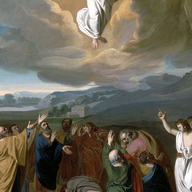
At the Right Hand
Forty days after Jesus rose from the dead, He ascended into heaven to take His place at the right hand of the Father (Acts 1:3), fulfilling the promise of Psalm 110. The Psalm is patterned as three sets of seven clauses. Verses 1-2 make up the first sequence, verses 3-4…
In Medias Res
Your weekly digest for all things Theopolis.