
In a 1997 review in First Things, Andrew McKenna suggests that Derrida’s most important contribution might ultimately be to deconstruct philosophy so thoroughly that one is left only with theology: “the Sermon on the Mount performs a critique of difference to which any deconstructor can subscribe. Subject to serious misuses, deconstruction is nonetheless, in its right use, not a simple trashing of culture and tradition, but a critique of differences-of the arbitrary semantic and institutional constructs that impose rather than reflect order. Accordingly, it naturally provides a critique of the symbolic violence that orders cultural representation. But, unlike the Sermon on the Mount, deconstructive philosophy provides no antidote. If sacrifice and scandal name the violence of conceptual thought at its extreme, it is fair to ask whether this is just the moment to give up on philosophy altogether, and, with the likes of Pascal, Kierkegaard, and Simone Weil, look elsewhere for the solutions to our problems. Philosophy’s self-deconstruction is conceivably Derrida’s principal contribution to theology.”
Peter Leithart
Peter J. Leithart is President of Theopolis Institute. He is the author of numerous books on theology, literature, and culture, including Theopolitan, Defending Constantine, and Baptized Body.
More from Theology
Continue reading related articles
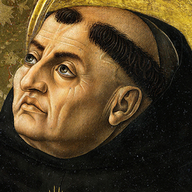
In Praise of Thomas
Gotta love ol’ Tommaso d’Aquino, a.k.a. Thomas Aquinas. The margins of my various copies of his works are full of notes of disagreement and question marks, but still: His toss-off arguments are usually deeper than the sustained arguments of lesser theologians. Here’s a pot pourri from the early part of…
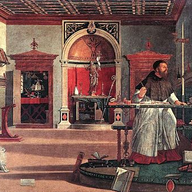
Hoping For Love
In his 2007 encyclical on hope, Spe Salvi , Pope Emeritus Benedict XVI observes that the experience of loving and being loved is a moment of “redemption.” Love gives new meaning, new joy, new energy. Every love is a new birth. We long and hope for love. We want it…
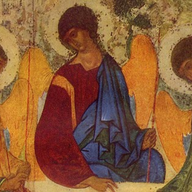
Is All That's In God God?
Divine simplicity is often summarized in the axiom, "All that's in God is God." If this is taken at face value, though, it conflicts with Trinitarian orthodoxy. 1) By this axiom, the Persons are identical with the essence of God. 2) But the Persons have (or are) identifying particularities or…
In Medias Res
Your weekly digest for all things Theopolis.