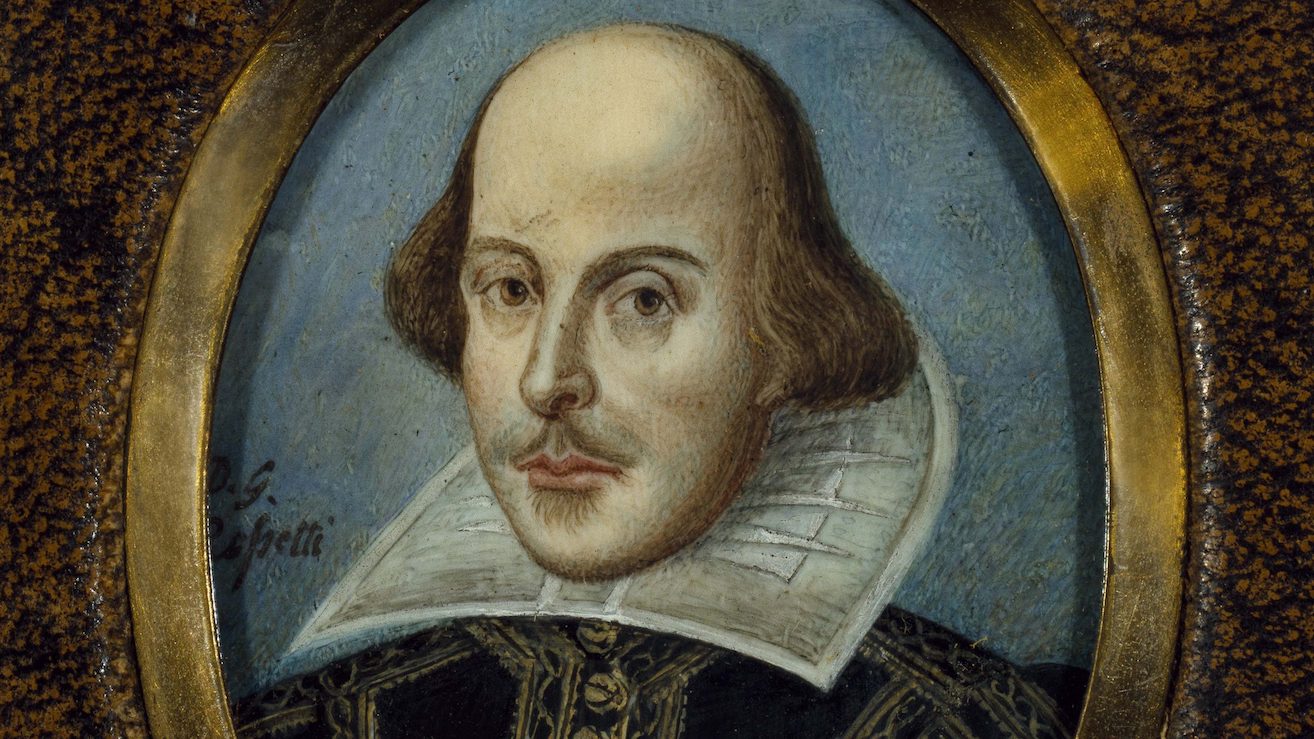
That’s quite a weighty title for a small thought. Melville’s Ahab says that the world is nothing but a pasteboard mask, and all the colors of the world, its variety of shapes and its beauties, are nothing but a harlot’s painting on a more essential blankness, a whiteness like the blank forehead of an albino sperm whale.
And so does Descartes. As summarized by EJ Diksterhuis, Descartes assumes that the material world is essentially extension in space, and in the strict sense is nothing more: “It seems to be more indeed: the material bodies we perceive also have physical qualities such as colour, odour, and taste, hardness, softness, brittleness, &x., but all these words merely designate states of consciousness with which we react to the presence of or the contact with particular parts of space, they are subjective reactions which the latter generate in us, and which cannot therefore be subject of scientific knowledge. Apart from the geometric characteristics of bodies, namely geometric form and size, only the kinematic magnitures determining their relative state of motion can be known in the scientific sense. Physics is the science of moving forms of space, and as such - just like geometry, which is concerned with resting forms of space - it can be deduced from axioms established a priori. The human mind brings forth not only mathematics but physics as well.”
Peter Leithart
Peter J. Leithart is President of Theopolis Institute. He is the author of numerous books on theology, literature, and culture, including Theopolitan, Defending Constantine, and Baptized Body.
More from Philosophy
Continue reading related articles
Substance or Tune?
Jonathan Edwards didn’t think the world is a machine. At the heart of the mechanistic interpretation of Newtonian physics, he discerned, was the notion that “bodies” are (in Robert Jenson’s words) “the sort of thing that either can or cannot act ‘properly by themselves.’” The mechanistic world picture involved an…
Paul's Idol Polemics
Joshua Jipp argues that Paul's Areopagus address contains both critique and propaganda, critique of Athenian superstition, lust for novelty, and idolatry, and propaganda in favor of Christian faith as a more consistent fulfillment of the aspirations of Hellenistic philosophical theology. Much of the critique, Jipp shows, is drawn from Isaiah's…
Of Causes and Effects
This essay was first published in The Theopolitan, a weekly newsletter for Theopolis Partners. To become a Partner, you must donate at least $500 per year or $50 per month. Give here . Craig Carter’s Thesis #2 about Trinitarian classical theism ( Contemplating God with the Great Tradition ) is,…
In Medias Res
Your weekly digest for all things Theopolis.