Jean-Claude Michea ( Realm of Lesser Evil ) traces the unconscious roots of liberalism.
Liberal egotism is the uneducated egotism of infants, who "desire to be all-powerful" (118) and express "boundless rage" (119; quoting Christopher Lasch) against anyone who fails to gratify. If parents fail the in task of "primary" socialization into a world of giving, receiving and assistance, "such subjects find themselves inexorably bound . . . to the initial desire for omnipotence, and as a consequence, lacking the ability to 'grow up'" (119).
This immaturity can express itself in "the pathetic need to become 'rich' or 'famous,'" in which people see lives "as the occasion for personal revenge." This will to power is a "sad passion": "there is no such thing as a happy tyrant" (120). The effort to climb to the top is frustrated: "those who have devoted their whole 'life' to climbing the steps of a hierarchy (of any kind) have never done more than 'crawl vertically'" (120, fn 13). Modern fascination with childhood, he argues, is precisely a fascination with unashamed egotism (119, fn. 12).
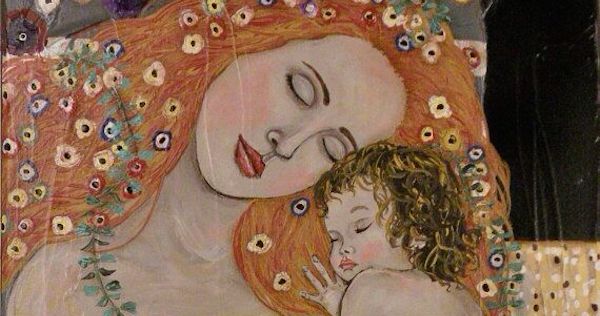
Michea also discern Oedipal dynamics at the roots of this immaturity, which results in a "matriarchal" drive to power that is, strangely, overlooked by those who make war against every form of patriarchy. Drawing on Zizek (who draws on Lacan), he distinguishes the symbolic law of the father from the Superego of the mother. Paternal authority says "You've got to visit your grandmother, whether you want to or not. And you'll behave, or else." The "bad mother" has a different kind of appeal: "Even though you know very well how much your grandmother wants to see you, you shouldn't go unless you really want to" (122-3).
The matriarchy makes the choice seem like a free choice, but that's a ruse. If the child refuses to go, the appeal turns to emotional blackmail: "How can you be so mean to grandma? What did she do to deserve it?" (123).
The matriarchy "imposes as a duty the subject's unconditional love, and by this fact, functions above all by emotional guilt-tripping . . . in modes of complain and accusation." It looks like soft power, but it "establishes a control far more radical [than the patriarchy], in so far as it cannot be assigned any kind of limit" (123). It exercises control "for their own good " and in the name of love, and often makes the subjects "blame themselves for their own ingratitude and moral shabbiness" (124). Meanwhile, the bad mother plays out "her crazy will to power . . . as an exemplary form of love and sacrificial devotion" (124).
Totalitarian systems trade in matriarchal domination by demanding love for the leader (134), and nationalist liberalism often treats the state as the "motherland" for which children are called to die: "death in battle [is seen] as the accomplishment of an act of love between children and mother" (135). As Menenius says in his opening parable in Coriolanus , a city can become an "unnatural dam" that eats up her own children.
This explains why the modern dismantling of "patriarchal" disciplinary systems never brings the freedom it promises. It misses a primary, and subtle, form of domination.
Peter Leithart
Peter J. Leithart is President of Theopolis Institute. He is the author of numerous books on theology, literature, and culture, including Theopolitan, Defending Constantine, and Baptized Body.
More from Liberalism
Continue reading related articles
Ecclesiocentrism
Ecclesiocentrism is both a theoretical framework and a practical agenda for a Christian politics after liberalism. THEORY 1. The gospel is an inherently political message, announcing the Lordship and Kingship of Jesus. 2. Christian political theory is ecclesiology. Or, more moderately, no political theory can be Christian without a central…
World After Liberalism
In A World After Liberalism , Matthew Rose takes note of a generational change taking place in American conservatism. Younger conservatives associated with the alt right don’t read the same writers as their elders: “Instead of William Buckley it is Curtis Yarvin. Instead of Milton Friedman it is Peter Thiel.…
Kingdom of Cupidity
Writing in the 1670s, Pierre Nicole turned the pessimistic anthropology of Jansenism into an apology for liberal order. "Men," he wrote, "being devoid of charity out of the derailment of sin, remain none the less filled with needs and are dependent on one another in countless ways." How can these…
In Medias Res
Your weekly digest for all things Theopolis.