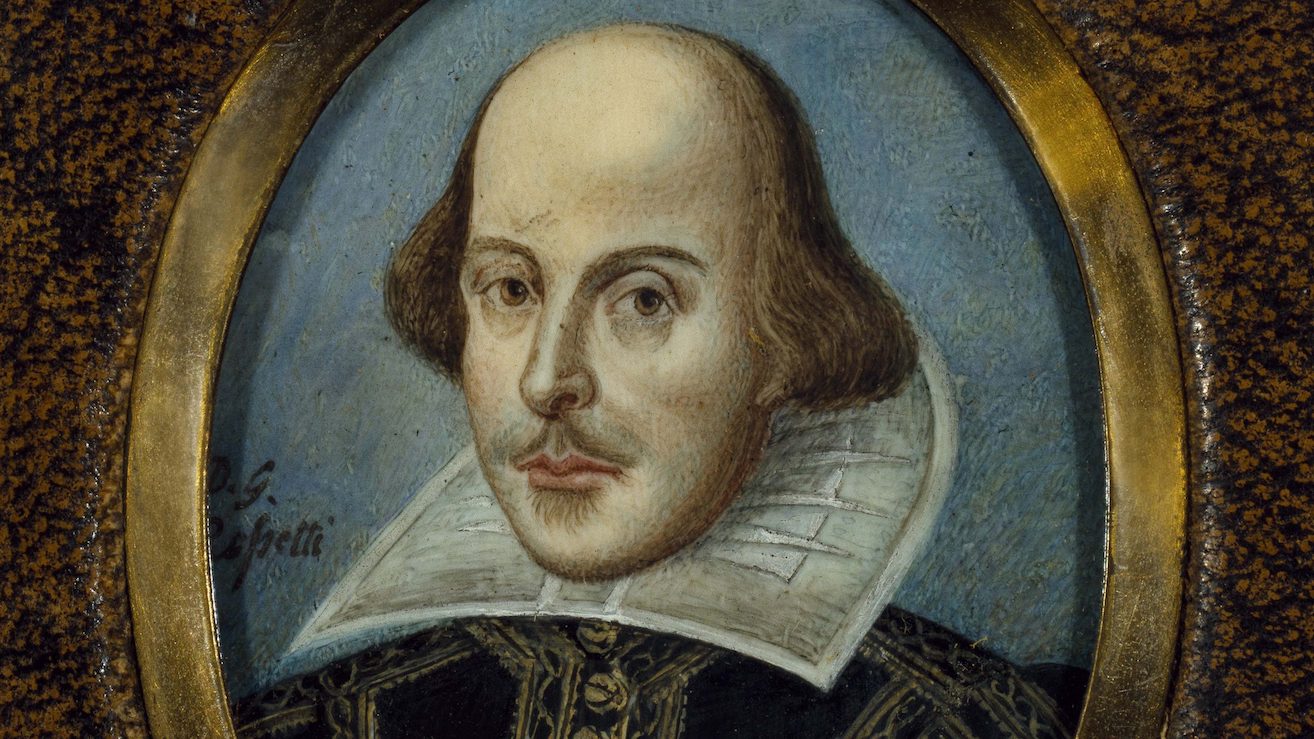
In one of the great essays on Great Expectations , J. Hillis Miller claims that Pip exemplifies a consistent view expressed in Dickens?s hero, which is equally a philosophical view of identity that tends toward existentialism and a closely related view of modern social order”
?Dickens heroes and heroines have never experienced perfect security. Each becomes aware of himself as isolated from all that is outside of himself. The Dickensian hero is separated from nature. The world appears to him as cold and unfriendly, as a ?wilderness?Eor a graveyard. In Dickens there is no Wordsworthian theory of a child?s filial bond with nature. There is no moment of primitive or infantile identification of subject and object, self and world, followed by a ?fall?Einto the cruel realm of time and division. The self is not initially the plenitude of a union with the entire universe, but is already narrowed down to the ?small bundle of shivers growing afraid of it all and beginning to cry.?EThe Dickensian hero is also alienated from the human community. He has no familial tie. He is an orphan, or illegitimate, or both. He has no status in the community, no inherited role which he can accept with dignity. He is characterized by desire, rather than by possession. His spiritual state is one of an expectation founded on a present consciousness of lack, of deprivation. He is, in Wallace Stevens?Ephrase, ?an emptiness that would be filled.??
Thus, ?Since the Dickensian hero has initially no real role, any status he attains in the world will be the result of his own efforts. He will be responsible, himself, for any identity he achieves, and thus ?guilty?Ein the sense of being the source of his own values. He has no hope of ever being justified by any exteranl approval. He will be, whatever he does, a ?self-made man,?Ea man who has made himself his own goal and end. This will be true in spite of any efforts on his part to escape his superfluity. The world has simply refused to give him any assigned place, and any place he gets will have to be seized.?E
Peter Leithart
Peter J. Leithart is President of Theopolis Institute. He is the author of numerous books on theology, literature, and culture, including Theopolitan, Defending Constantine, and Baptized Body.
More from Literature
Continue reading related articles
God's Plenty
A few thoughts on the “General Prologue” to Chaucer’s Canterbury Tales . 1) The Prologue sets the stage for a multi-layered set of tales. The real-life Chaucer is, of course, the author, but in the Prologue, he introduces a fictional version of himself as narrator: It happened in that season…
Violence as Poetry
Paul and Jane Sinclair, protagonists of J.G. Ballard’s 2000 novel Super-Cannes , move from England to the French Riviera to live at a new high-tech business park, Eden-Olympia (!), after Jane’s friend and former lover, Dr. David Greenwood, goes on a killing spree that ends with suicide. Jane, a pediatrician,…

Memento Mori
Virtually all the characters in Muriel Spark’s 1959 novel, Memento Mori , are over 70. They suffer the physical humiliations of aging and the pains of regret. Unexpectedly, hilariously, they’re as competitive and petty as schoolchildren. Well into his 80s, Godfrey Colston scorns the crippled critic Guy Leets for the…
In Medias Res
Your weekly digest for all things Theopolis.