
Modernity ignores the social, linguistic, and political context of thought, and the way interest shapes the mind; postmodernity foregrounds all this.
Perhaps, but . . . .
Descartes said that his travels demonstrates that “all those who hold notions strongly contrary to our own are not for that reason barbarians or savages, and many of them are just as reasonable as we; and . . . the identical man, with the identical mind, nurtured from his childhood among French or Germans becomes different from what he would be had he always lived among Chinese or Cannibals.”
Locke noted that few ideas win approval for their evidential power: “Truths gaine admittance to our thoughts as the philosopher did to the Tyrant by their handsome dresse and pleaseing aspect, they enter us by composition, and are entertained as they suite our affections, and as they demeane themselves towards our imperious passions, when an opinion hat wrought its self into our approbations and is gott under the protection of our likeing tis not all the assults of argument, and the battery of dispute shall dislodge it? Myn life upon trust and their knowledg is noething but opinion moulded up betweene custom and Interest, the two great Luminarys of the world, the only lights they walke by.”
Peter Leithart
Peter J. Leithart is President of Theopolis Institute. He is the author of numerous books on theology, literature, and culture, including Theopolitan, Defending Constantine, and Baptized Body.
More from History
Continue reading related articles

Realness of Things Past
Greg Anderson began thinking about the thesis of his Realness of Things Past while working on a book on the “state” in classical Greece. He discovered there was no such thing as an Athenian “state,” and that conclusion led him to question the way historians do history. Instead of running…

The Power of the Margins
David Martin (1929-2019) was a secularization skeptic. He acknowledged that modern societies typically undergo a process of "differentiation," in which various sectors of social and political life free themselves from the oversight of religious authority. He acknowledged that in many modern societies religious institutions and values are "marginalized." But he…
Zwinglian Symbolism
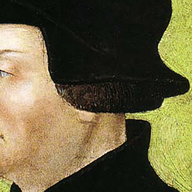
Nathan Mitchell (writing in the Oxford History of Christian Worship , 324) denies that Zwingli taught a "mere symbolist" according to which the Supper "simply served to remind believers of the great benefits bestowed on them through Christ's passion and death." Zwingli wasn't a symbolist "in any modern sense." Mitchell…
In Medias Res
Your weekly digest for all things Theopolis.