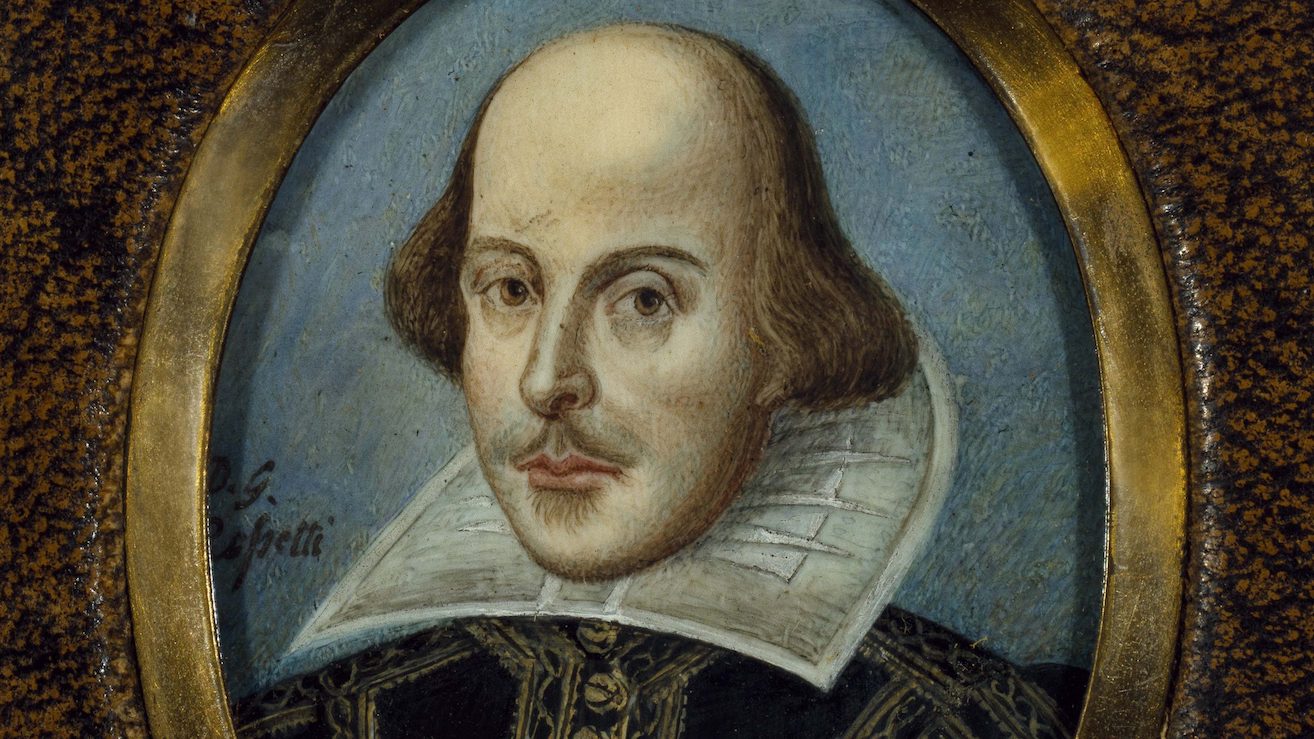
Joseph Epstein goes to town pricking the inflated reputation of George Steiner in the Feb 16 issue of the Weekly Standard . Among his jibes: “I once, in print, referred to Harold Bloom as George Steiner without the sense of humor, which was, as Senator Claghorn used to say, ‘A joke, I say, that’s a joke, son,’ because more humorless than Steiner human beings do not come.” And, “Steiner’s pretensions are to polymathy. He claims just about all knowledge as his province. His reading is three stages beyond omnivorous ?Ealthough he might admit, on the rare occasion, to a bad conscience over not reading an eight-volume history of the French Revolution (by Georges Sorel) that you had not hitherto known existed.” And, “At one point in his text Steiner refers to ‘mandarin ostentation’ and at another remarks upon usin an ‘orotund flourish’ deliberately. But without mandarin ostentation and orotund flourishes, Steiner’s prose would not exist and he himself would be out of business.” And, Epstein remarks that in Steiner’s work “Things that are not iconic tend to canonic, and a vast number of things are ‘seminal.’ Steiner, one begins to feel after reading him for many years, greatly underrates the power of semen.” And, “My friend Edward Shils once gave me a most useful clue to the best way to read Steiner. He claimed that many years ago he read a splendid parody of Steiner’s of the way a Soviet apparatchik thought. Steiner, he felt, was a marvelous mimic. And so, I have come to see, he is. What George Steiner has been doing, over the past forty or so years, is an incomparable impression of the world’s most learned man.” Ba-rump-bump.
Speaking as one who has read Steiner with awe, enjoyment and profit, Epstein’s pricks hit their target. In my mind, Steiner is not wholly deflated, but as I read Epstein’s review I was sure I could hear the hissing sound of escaping air.
I can’t resist adding Epstein’s reflections on his own teaching career: “I recently closed down a university teaching career of thirty years, and I would like to go on record as saying that I wouldn’t have done it for a penny less. Teaching is arduous work, entailing much grinding detail and boring repetition — a teacher, it has been said, never says anything once ?Einterrupted only occasionally by moments of always surprising exultation. And I should like to add that I don’t think I learned a thing from my students, except that, as one student evaluation informed me, I tend to jingle the change in my pocket.”
Peter Leithart
Peter J. Leithart is President of Theopolis Institute. He is the author of numerous books on theology, literature, and culture, including Theopolitan, Defending Constantine, and Baptized Body.
More from Media
Continue reading related articles
Publicity
In the third of his 2001 Stob Lectures, published as Common Objects of Love , Oliver O'Donovan explores the modern phenomenon of "publicity," the distinctly modern proliferation of images and information through advertising, news media, and entertainment. Publicity didn't exist in the ancient world. Kings had messengers and spies, but…
Unforgetful
In Delete: The Virtue of Forgetting in the Digital Age ,Victor Mayer-Schonberger explores the reversal of memory and forgetfulness in the digital age: “Since the beginning of time, for us humans, forgetting has been the norm and remembering the exception. Because of digital technology and global networks, however, this balance…
From Bauhaus to Your Mac
In an intriguing TNR review of Walter Isaacson’s Steve Jobs , Evgeny Morozov says that the Apple “philosophy” - a form of pop-Platonism emphasizing the link between “essence” and function, purity, unornamented sleekness - cannot be understood except as an expression of a modernist design aesthetic most famously embodied in…
In Medias Res
Your weekly digest for all things Theopolis.