
Thanks to my student Larson Hicks for the substance of this post.
Until a command is fully carried out, we don’t have a complete grasp of what the command means or requires of us. “Take Normandy Beach,” solider are told, but that order demands courageous charges, sacrificial death, skillful feints, accurate shooting, tactical retreats of its thousands of participants. “Let’s tighten up the defense,” the coach says in the huddle, but the import of that demand is only apparent at the final buzzer, perhaps not until the sportwriters have had their say. “Revise the program,” an executive tells his programming team, but that command can only be fulfilled through thousands of hours of labor, dozens of snags, countless moments of head-scratching puzzlement.
The same is true in the history of the church. Christian history begins, we can say, with the Great Commission, Jesus’ command to the disciples to disciple the nations through baptism and teaching. It will end with a final judgment, a final assessment of every word and act done in history. Until that day, we will not have a complete grasp of what it means to disciple, what baptism means, what it means to teach.
Take baptism: Baptism does have a constant significance throughout the ages, but each individual baptism enriches it. For Samaritans in the first century, baptism meant that Samaritans were included as full members of the new people of God. When Gentiles were initiated with the same rite as Jews, the ancient division of the human race was being washed away. An Ethiopian eunuch receives baptism, and we learn that the waters of baptism stretch beyond the Mediterranean world.
And on it goes throughout the centuries, as baptism incorporates men and women from every nation and tribe into one people, as it makes millions of individual life-stories into chapters of the story of Jesus and His people. And each time, we can say, Oh yes, baptism means that, and that, and that too.
Peter Leithart
Peter J. Leithart is President of Theopolis Institute. He is the author of numerous books on theology, literature, and culture, including Theopolitan, Defending Constantine, and Baptized Body.
More from Theology
Continue reading related articles
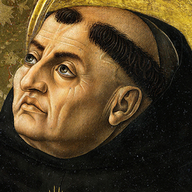
In Praise of Thomas
Gotta love ol’ Tommaso d’Aquino, a.k.a. Thomas Aquinas. The margins of my various copies of his works are full of notes of disagreement and question marks, but still: His toss-off arguments are usually deeper than the sustained arguments of lesser theologians. Here’s a pot pourri from the early part of…
Hoping For Love
In his 2007 encyclical on hope, Spe Salvi , Pope Emeritus Benedict XVI observes that the experience of loving and being loved is a moment of “redemption.” Love gives new meaning, new joy, new energy. Every love is a new birth. We long and hope for love. We want it…
Is All That's In God God?
Divine simplicity is often summarized in the axiom, "All that's in God is God." If this is taken at face value, though, it conflicts with Trinitarian orthodoxy. 1) By this axiom, the Persons are identical with the essence of God. 2) But the Persons have (or are) identifying particularities or…
In Medias Res
Your weekly digest for all things Theopolis.