
In an essay on “Eschatology” in the Blackwell Companion to Political Theology , the late Robert Jenson argues that Christian eschatology is “directly and almost exclusively a discourse about politics.”
The coming of the kingdom means that “the eschaton-polity” Israel hoped for, “the universal polity of peace, appeared as a possibility for present citizenship.” After the resurrection, the church embarked on a mission “to bring all into this citizenship.”
The church that results is the “presence of God’s polity,” struggling, tempted and ambiguous to be sure, but still God’s eschatological polity in the present.
Christian eschatology has juxtaposed this political vision of the end with hope for a “beatific vision” and union with God.” Jenson thinks both are true, and in fact they are different dimensions of the same reality.
The eschatological city is the people of God joined to the Son, so that in the end “the second person of the Trinity is eschatologically a communal reality that includes a created community.”
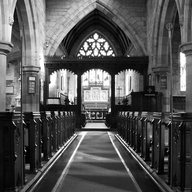
In the present age, this means that “The first political calling of the church, its first way to be a blessing for the polities of this age, is simply to be itself, to be a sign of the eschaton.” To say the same thing again, “the first political calling of the church is to celebrate the Eucharist.”
Summarizing Augustine, Jenson describes the Eucharist as “a public space where the one God gives himself to his community, and where in consequence all sorts and conditions of humanity drink from one cup and eat of one loaf, and whose parliament of common and mutual prayer is a perfect participatory democracy.”
The Eucharist is central because “The approximation for this age of the kingdom’s mutuality is the Eucharist. Therefore it provides the true ideal of political striving. . . . All classes and races drink from the one cup and eat the one bread, and so share equally in the good that gathers the church.”
Jenson is aware that “social justice” is a battle cry of heresy, but “its origin is deep in the life of the church,” in the common feast of the Supper.
The Eucharistic city isn’t an egalitarian polity: “the Eucharist does know a hierarchy, of celebrant and people and of various ministries to both.” But since God is the Good shared by the people, “the hierarchy within it does not impede the mutuality of the discourse, or establish an oligarchy or even a merely representative democracy.”
And this eschatological/Eucharistic vision forms our understanding of worldly politics: “The citizens of the eucharistic polity know that differences of gifts, even differences of more and less, are not in themselves evil, and are to be cherished in polities of this world also.”
Peter Leithart
Peter J. Leithart is President of Theopolis Institute. He is the author of numerous books on theology, literature, and culture, including Theopolitan, Defending Constantine, and Baptized Body.
More from Ecclesiology
Continue reading related articles

Ecclesiocentrism
Ecclesiocentrism is both a theoretical framework and a practical agenda for a Christian politics after liberalism. THEORY 1. The gospel is an inherently political message, announcing the Lordship and Kingship of Jesus. 2. Christian political theory is ecclesiology. Or, more moderately, no political theory can be Christian without a central…
Do We Need the Church?
A few weeks ago, I gave an online talk for the Colson Center. These were my opening comments. Let me begin by playing a game theologians often play, the game of challenging the question. The title of this series is, “The Essential Church: Why Christians (and the World) Still Need…
Pauline Equality
“The religion of our time,” says the writer known as Bronze Age Pervert , “is the unquestioned and absolute worship of human equality.” That may not be the religion, but it’s certainly one of them, and one that threatens to dissolve the moral and social distinctions and hierarchies on which…
In Medias Res
Your weekly digest for all things Theopolis.