
In case you got bogged down and missed the plot, Thornton Wilder helpfully summarizes what he describes as Joyce’s “Night Book”: “We overhear and oversee [the hero] in bed above his tavern at the edge of Dublin.  His conscience is trying him for some obscure misdemeanors committed - or perhaps only partially envisaged - during the day.  He is in disgrace.  He identifies himself with Lucifer fallen from Heaven, Adam ejected from Paradise, Napoleon defeated at Waterloo, Finnegan of the old ballad laid out for his wake.  It is the Book of Falls, and as the night advances he plunges deeper and relives all the crimes of which man is capable; he stands trial (the very constellations of the night sky are sitting in judgment).  He submits his defense and extenuation.  Finally dawn arrives; the sun climbs through the transom of the Earwickers’ bedroom.  The last chapter is a wonderful sunburst of Handelian rhetoric; all the resurrection myths of the world are recalled along with Pears’ soap advertisements and the passing trains and the milkman.  The phoenix is reborn; Everyman re-awakes.”  All this written in “a language in which all the tongues of the world have coalesced into a pate , the barriers between them having become imperceptible at that level.”
Got it?
Peter Leithart
Peter J. Leithart is President of Theopolis Institute. He is the author of numerous books on theology, literature, and culture, including Theopolitan, Defending Constantine, and Baptized Body.
More from Literature
Continue reading related articles
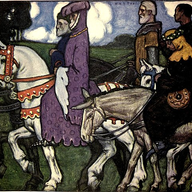
God's Plenty
A few thoughts on the “General Prologue” to Chaucer’s Canterbury Tales . 1) The Prologue sets the stage for a multi-layered set of tales. The real-life Chaucer is, of course, the author, but in the Prologue, he introduces a fictional version of himself as narrator: It happened in that season…
Violence as Poetry
Paul and Jane Sinclair, protagonists of J.G. Ballard’s 2000 novel Super-Cannes , move from England to the French Riviera to live at a new high-tech business park, Eden-Olympia (!), after Jane’s friend and former lover, Dr. David Greenwood, goes on a killing spree that ends with suicide. Jane, a pediatrician,…

Memento Mori
Virtually all the characters in Muriel Spark’s 1959 novel, Memento Mori , are over 70. They suffer the physical humiliations of aging and the pains of regret. Unexpectedly, hilariously, they’re as competitive and petty as schoolchildren. Well into his 80s, Godfrey Colston scorns the crippled critic Guy Leets for the…
In Medias Res
Your weekly digest for all things Theopolis.