
Much of the poetry of Frederick Turner’s Paradise is traditionally rhymed and metered, and employs the veiled self-referentiality of earlier generations of poets (“the poet” appears in a number of poems). The themes of the poetry are also very traditional, focusing, as Turner points out in the concluding essay, on the conflict between earthly and heavenly baradises. It is a sign of the times that such conservative and traditional poetry can come off sounding radical, as in Turner’s paeon to America, “Why they hate America,” which includes these lines:
Because America has fought and killed and won And always less cruelly than any other nation.
Because America sinned with its black slaves And repented, and wounded itself, and sinned again, And wounded itself, an confessed, And made sin come out in the open, And reminded everyone of his secret shames.
I found myself wishing for something more stylically adventurous, but Turner is worth reading because he says things in his poetry that few others say in poetry or prose.
Peter Leithart
Peter J. Leithart is President of Theopolis Institute. He is the author of numerous books on theology, literature, and culture, including Theopolitan, Defending Constantine, and Baptized Body.
More from Literature
Continue reading related articles
God's Plenty
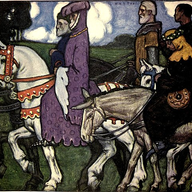
A few thoughts on the “General Prologue” to Chaucer’s Canterbury Tales . 1) The Prologue sets the stage for a multi-layered set of tales. The real-life Chaucer is, of course, the author, but in the Prologue, he introduces a fictional version of himself as narrator: It happened in that season…
Violence as Poetry
Paul and Jane Sinclair, protagonists of J.G. Ballard’s 2000 novel Super-Cannes , move from England to the French Riviera to live at a new high-tech business park, Eden-Olympia (!), after Jane’s friend and former lover, Dr. David Greenwood, goes on a killing spree that ends with suicide. Jane, a pediatrician,…

Memento Mori
Virtually all the characters in Muriel Spark’s 1959 novel, Memento Mori , are over 70. They suffer the physical humiliations of aging and the pains of regret. Unexpectedly, hilariously, they’re as competitive and petty as schoolchildren. Well into his 80s, Godfrey Colston scorns the crippled critic Guy Leets for the…
In Medias Res
Your weekly digest for all things Theopolis.