
Derrida’s pursuit of the pure gift is premised on a strict dichotomy of “economy” and “gift.” “Economy” includes anything done for gain, no matter how meager that gain is (it might be the feeling of satisfaction I get from giving something useful to someone); “gift” is the impossible purity of disinterested generosity.
As a number of my students have pointed out, this dichotomy is wholly bogus. It exists only theoretically. In practice, gift is infused into economy, even the most self-interested capitalist economy.
Milbank points out the various liminal cases - business lunches, tips, customer loyalty, and so on. Even gift exchanges strictly speaking usually begin with economic transactions: I buy something to give it away, or buy the materials from which I can make a future gift. The isolation of “economic” activity from various forms of gift exchange is unreal.
And yet, this unreality seems to be inherent in modern economic theory (seems to me, but I might stand corrected). Classical economists tend to examine “purely economic” production, distribution, exchange, ignoring all the gift/gratitude/relationship dynamics that surround and infuse economic activity. More recently, economists have attended to these other factors, but much of economic theory seems (again, I may stand corrected) to isolate economy.
Economy is as much a figment as “the social.” That means that “economic explanations” are fictitious. To be an explanatory, “economy” has to be isolatable from everything else, but it’s not in reality.
If I am right about classical economic theory (and I might stand corrected), the question arises of why it should have developed this way. Why would gift/gratitude/relationship be left out of economic consideration? And, how would economic theory be different if it’s included?
Peter Leithart
Peter J. Leithart is President of Theopolis Institute. He is the author of numerous books on theology, literature, and culture, including Theopolitan, Defending Constantine, and Baptized Body.
More from Uncategorized
Continue reading related articles

Cautions About Conversion
Wisdom from my old friend and colleague, Rev. Rich Bledsoe, on conversion . People "meet" Jim Jordan, and have the bracing thrill of escaping the flatness of just living and being in the 21st century. They might take off to the thrilling different world of Eastern Orthodoxy. They experience the…
Spousal Body
John Paul II ( Man and Woman He Created Them: A Theology Of The Body , 181-5) argues from Genesis that “‘alone,’ the man does not completely realize [his] essence.” Without the woman, Adam does not possess the “basic conditions that make it possible to exist in a relation of…
At the Right Hand
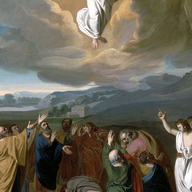
Forty days after Jesus rose from the dead, He ascended into heaven to take His place at the right hand of the Father (Acts 1:3), fulfilling the promise of Psalm 110. The Psalm is patterned as three sets of seven clauses. Verses 1-2 make up the first sequence, verses 3-4…
In Medias Res
Your weekly digest for all things Theopolis.