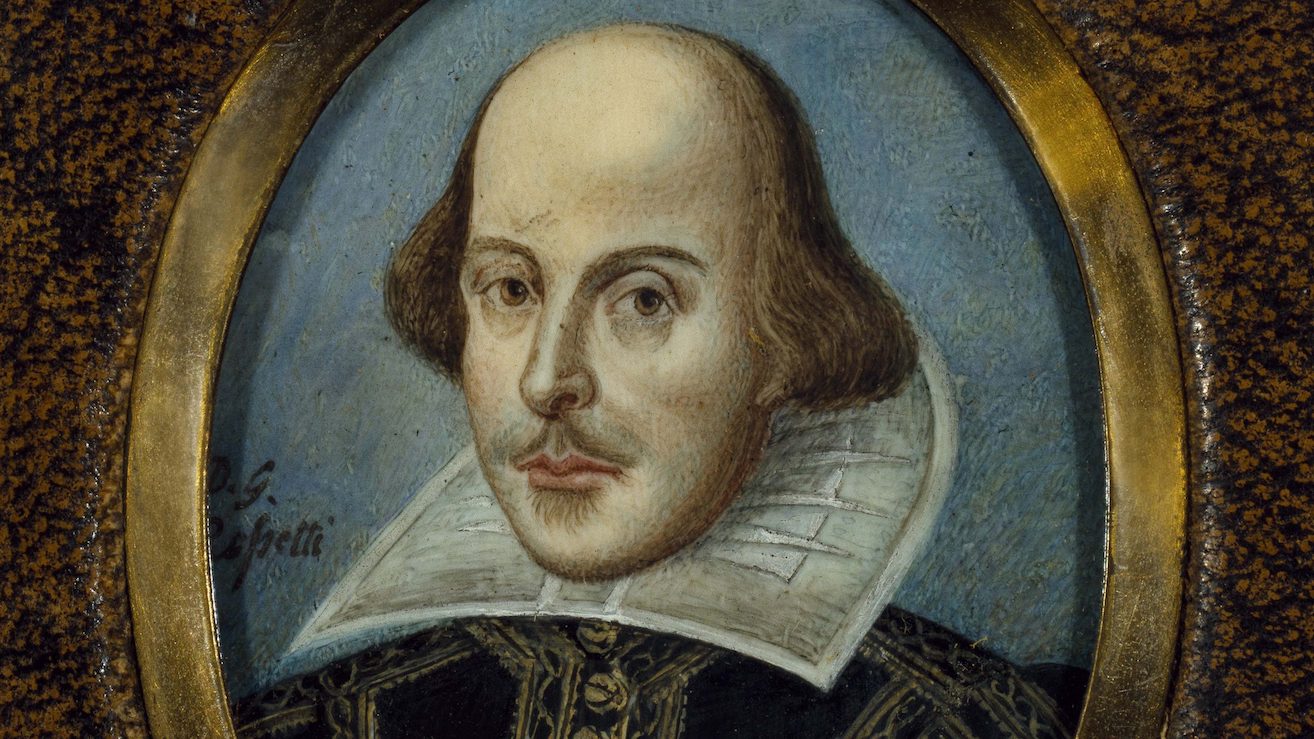
The influence of Hamlet, the play and the character, on modern literature is vast. Consider Hamlet as model for Prufrock:
Zulfikar Ghose says the “I am not Hamlet” in Eliot’s Prufrock may be literal or ironic, but then adds: “the more one ponders the language of ‘Prufrock’ and of Hamlet the more one observes a striking convergence of thought. In the end of ‘Prufrock,’ the mind, having failed to perceive the vision it has sought, invents one for itself; and to have heard mermaids singing is to have experienced a madness tha may or may not have been feigned; the mind, unable to arrive at philosophical truth, turns to the world of pure fiction to see if reality may not be discovered through the formulations of fiction.
“As does Hamlet: ‘Enter the Players.’”
Martin Scofield muses along the following lines: “what did Prufrock think Hamlet was? One who did ‘murder’ (if not ‘create’)? One who did ‘disturb the Universe’? Certainly one who had time for ‘a hundred indecisions/And for a hundred visions and revisions.’” Hamlet certainly rolls the universe up into the “overwhelming question” of “To be or not to be.” For Prufrock, Hamlet is the hero, but as Scofield points out “Hamlet himself has Prufrockian moments,” moments when his greatness flickered, when he wept and prayed, when he played the fool, when he longed to be a pair of ragged claws scuttling beneath the sea. For Eliot, Hamlet was “a particularly interesting romantic hero because his heroism seems to tend towards something very different, a Prufrockian lack of belief in himself. He is the romantic hero on the verge of becoming something else . . . . In rejecting an identification with Hamlet, Prufrock is still thinking in romantic and heroic terms . . . . The poem is Eliot’s critique of the vestiges of literary romanticism in a modern mind, and he turns to Hamlet for an aptly ambiguous symbol of that romanticism.”
Peter Leithart
Peter J. Leithart is President of Theopolis Institute. He is the author of numerous books on theology, literature, and culture, including Theopolitan, Defending Constantine, and Baptized Body.
More from Literature
Continue reading related articles
God's Plenty
A few thoughts on the “General Prologue” to Chaucer’s Canterbury Tales . 1) The Prologue sets the stage for a multi-layered set of tales. The real-life Chaucer is, of course, the author, but in the Prologue, he introduces a fictional version of himself as narrator: It happened in that season…
Violence as Poetry
Paul and Jane Sinclair, protagonists of J.G. Ballard’s 2000 novel Super-Cannes , move from England to the French Riviera to live at a new high-tech business park, Eden-Olympia (!), after Jane’s friend and former lover, Dr. David Greenwood, goes on a killing spree that ends with suicide. Jane, a pediatrician,…

Memento Mori
Virtually all the characters in Muriel Spark’s 1959 novel, Memento Mori , are over 70. They suffer the physical humiliations of aging and the pains of regret. Unexpectedly, hilariously, they’re as competitive and petty as schoolchildren. Well into his 80s, Godfrey Colston scorns the crippled critic Guy Leets for the…
In Medias Res
Your weekly digest for all things Theopolis.