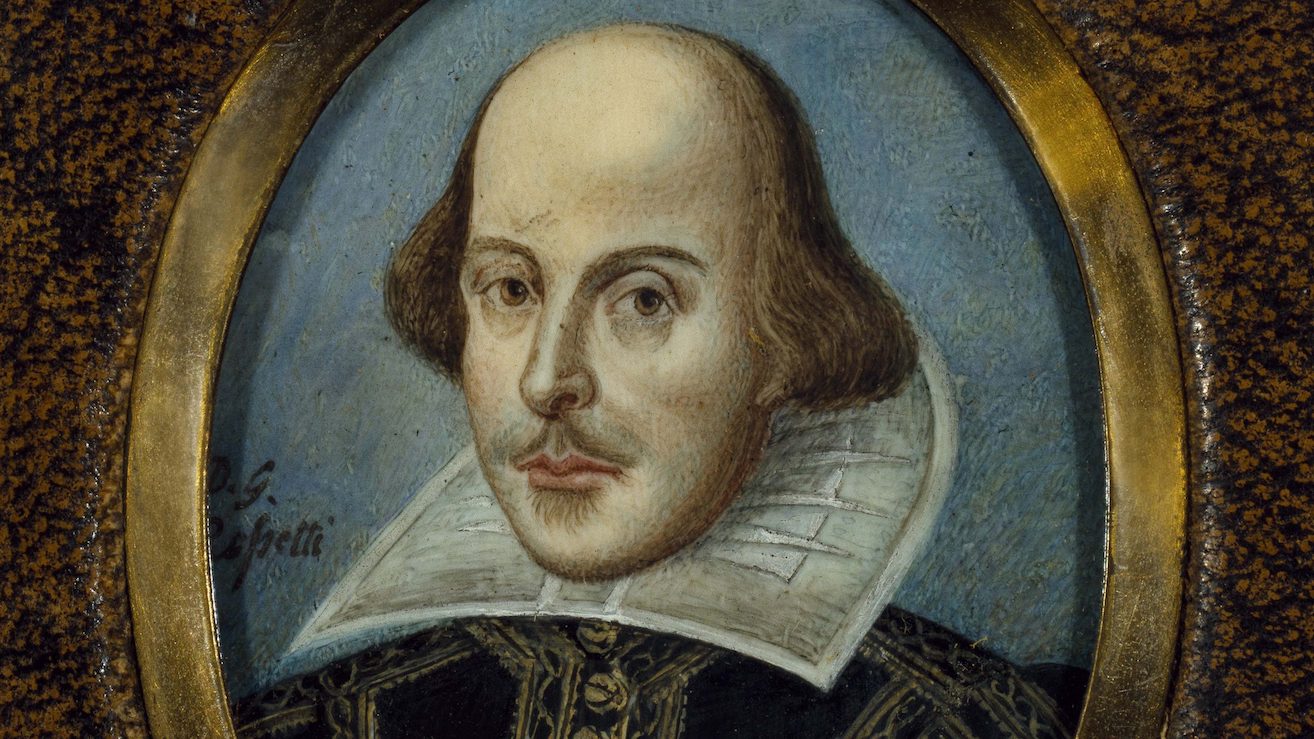
John Alvis suggests that in Hamlet, Shakespeare alligns himself with Machiavelli at least to the extent that he sees Christianity (or certain forms of Christianity) as a comfort to tyrants. Christians, Machiavelli says, are unresistant to tyranny because they have been taught to wait for the justice of God, to endure evil patiently, and to seek reward in a heavenly kingdom. For Alvis, Hamlet fails to shoulder his responsibilities as prince - overthrowing the usurper the chief among them - because he is of a Christian faith that weakens his resolve. Ultimately, Alvis thinks that Shakespeare parts ways with Machiavelli, pointing not to pagan political strength but to a more politically robust form of Christianity.
An interesting argument, spoiled, however, by Alvis’ suggestion that Hamlet is operating by “a Calvinistic insistence upon total depravity resulting from original sin.” But the “faith” that Alvis actually sees in Hamlet (hostility to body, sex, and materiality) has more to do with gnosticism than Calvinism.
Peter Leithart
Peter J. Leithart is President of Theopolis Institute. He is the author of numerous books on theology, literature, and culture, including Theopolitan, Defending Constantine, and Baptized Body.
More from Literature
Continue reading related articles
God's Plenty
A few thoughts on the “General Prologue” to Chaucer’s Canterbury Tales . 1) The Prologue sets the stage for a multi-layered set of tales. The real-life Chaucer is, of course, the author, but in the Prologue, he introduces a fictional version of himself as narrator: It happened in that season…
Violence as Poetry
Paul and Jane Sinclair, protagonists of J.G. Ballard’s 2000 novel Super-Cannes , move from England to the French Riviera to live at a new high-tech business park, Eden-Olympia (!), after Jane’s friend and former lover, Dr. David Greenwood, goes on a killing spree that ends with suicide. Jane, a pediatrician,…

Memento Mori
Virtually all the characters in Muriel Spark’s 1959 novel, Memento Mori , are over 70. They suffer the physical humiliations of aging and the pains of regret. Unexpectedly, hilariously, they’re as competitive and petty as schoolchildren. Well into his 80s, Godfrey Colston scorns the crippled critic Guy Leets for the…
In Medias Res
Your weekly digest for all things Theopolis.