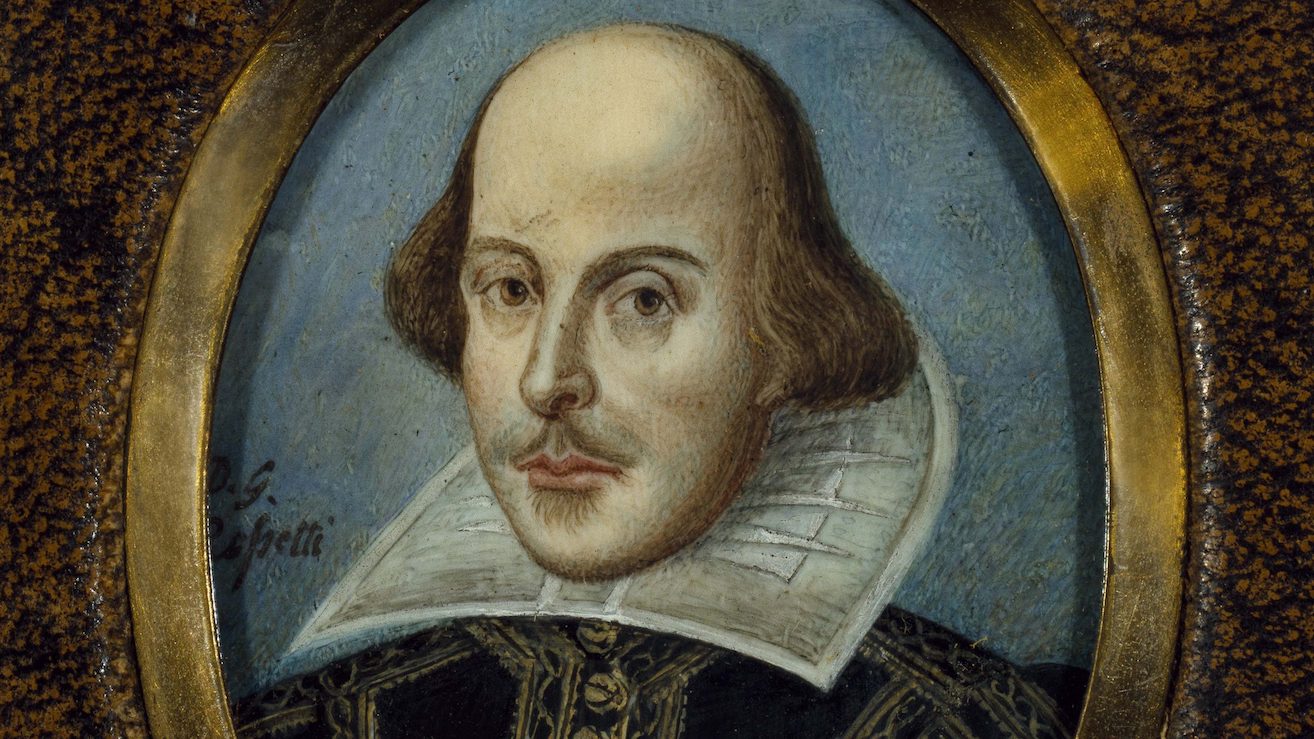
Gil Baillie, working in a Girardian framework, suggests that the claim that man is made in the image of God means “this creature can only fulfill its destiny by becoming like someone else. So counterinstinctual and counterintuitive is such a thing, that the likelihood of this creature actually fulfilling such a destiny would be slim, indeed, unless the creature were somehow endowed with a desire to do so, a desire equally counterinstinctual and counterintuitive, a desire to be itself by becoming like someone else.”
From this perspective, he argues, “the postmodern assumption that the self is an artificial social construct” - though “naive” and thought “it usually harbors hidden agendas” - still “might help awaken Christians to the fact that something at least as shocking lies at the heart of Christian personhood. In a very real sense, at the burning center of Christianity is a person who emphatically insists that he exists only to bear witness to another person, a person whose life is therefore iconic in the extreme, an icon of the invisible God, the God, moreover, in whose image and likeness Genesis tells us we are made.” Postmodernity is thus “setting up questions to which Christianity has answers.” Postmodernity might help Christians recover the insight of Tertullian: “the soul is naturally Christian.”
Peter Leithart
Peter J. Leithart is President of Theopolis Institute. He is the author of numerous books on theology, literature, and culture, including Theopolitan, Defending Constantine, and Baptized Body.
More from Theology
Continue reading related articles
In Praise of Thomas
Gotta love ol’ Tommaso d’Aquino, a.k.a. Thomas Aquinas. The margins of my various copies of his works are full of notes of disagreement and question marks, but still: His toss-off arguments are usually deeper than the sustained arguments of lesser theologians. Here’s a pot pourri from the early part of…
Hoping For Love
In his 2007 encyclical on hope, Spe Salvi , Pope Emeritus Benedict XVI observes that the experience of loving and being loved is a moment of “redemption.” Love gives new meaning, new joy, new energy. Every love is a new birth. We long and hope for love. We want it…
Is All That's In God God?
Divine simplicity is often summarized in the axiom, "All that's in God is God." If this is taken at face value, though, it conflicts with Trinitarian orthodoxy. 1) By this axiom, the Persons are identical with the essence of God. 2) But the Persons have (or are) identifying particularities or…
In Medias Res
Your weekly digest for all things Theopolis.