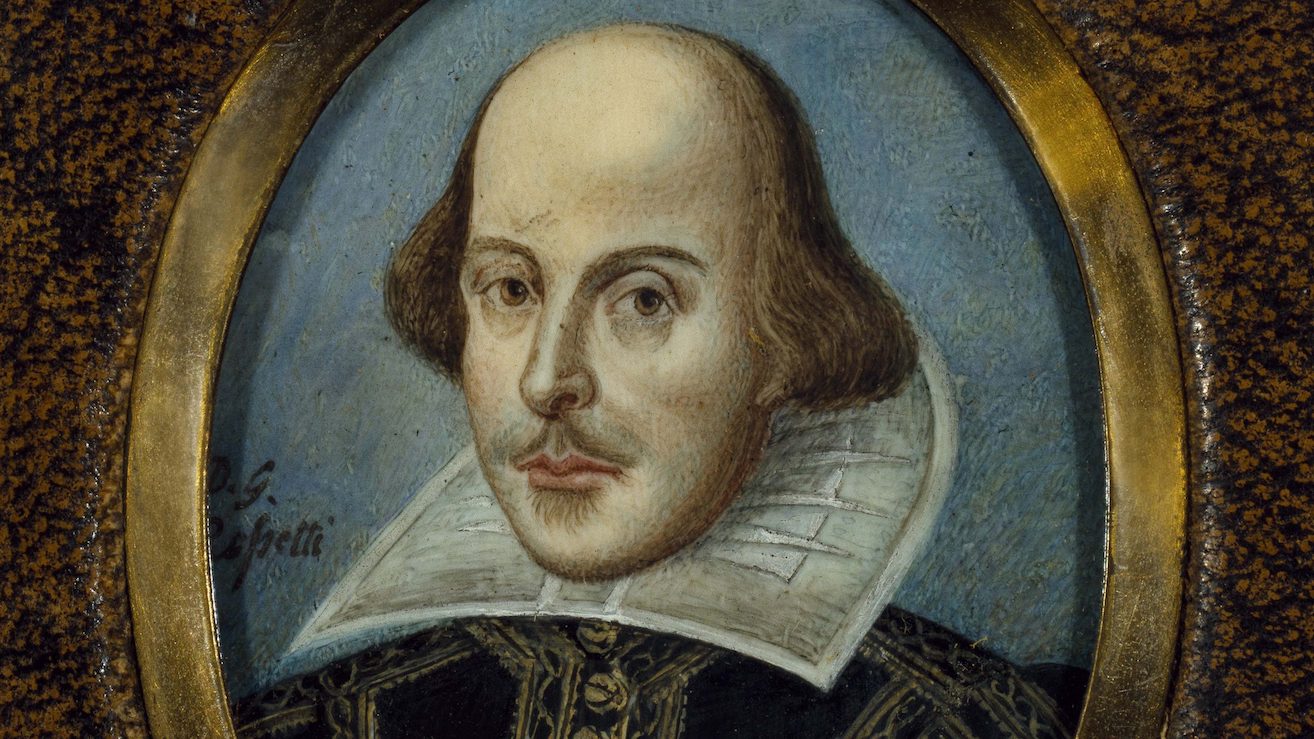
In the Summa theologiae (1.1.9), Thomas argues that “it is more fitting that divine matters should be conveyed under the figure of lowly bodies than of noble bodies.” Rocks are better figures for God than ideal forms. Thomas gives three reasons for this preference: First, if “lowly” bodies provide the figures for God, no one will be tempted to think that the figure is a literal description of God. Second, because lowly bodies are more fitting as means for knowledge in our current conditions of knowledge - that is, prior to the beatific vision: “what God is not is clearer to us than what God is. Therefore likenesses drawn from things farthest away from God form within us a truer estimate that God is above whatever we may say or think of God.” Third, because such figures hide God’s revelation “from the unworthy.”
I have some reservations about this, but on the whole I think it very shrewd, and too often forgotten. After all, which figure of God has done the most theological mischief - “God is a rock” or “God is the Wholly Other”? “God is a Shepherd” or “God is the Supreme Being”?
Peter Leithart
Peter J. Leithart is President of Theopolis Institute. He is the author of numerous books on theology, literature, and culture, including Theopolitan, Defending Constantine, and Baptized Body.
More from Theology
Continue reading related articles
In Praise of Thomas
Gotta love ol’ Tommaso d’Aquino, a.k.a. Thomas Aquinas. The margins of my various copies of his works are full of notes of disagreement and question marks, but still: His toss-off arguments are usually deeper than the sustained arguments of lesser theologians. Here’s a pot pourri from the early part of…
Hoping For Love
In his 2007 encyclical on hope, Spe Salvi , Pope Emeritus Benedict XVI observes that the experience of loving and being loved is a moment of “redemption.” Love gives new meaning, new joy, new energy. Every love is a new birth. We long and hope for love. We want it…
Is All That's In God God?
Divine simplicity is often summarized in the axiom, "All that's in God is God." If this is taken at face value, though, it conflicts with Trinitarian orthodoxy. 1) By this axiom, the Persons are identical with the essence of God. 2) But the Persons have (or are) identifying particularities or…
In Medias Res
Your weekly digest for all things Theopolis.