
Jim Rogers of Texas A&M responds to my posts about liberalism, where I quoted a couple of passages from a recent essay by John Milbank. Rogers writes:
“I do think that there is probably a liberal anthropology that can be criticized in a way similar to Milbank. But sometimes I wonder if both liberals and anti-liberals impute too much theoretical weight ‘anthropology’) to what is really just a very practical and non-controversial intellectual move.
“I think what Locke (and Rawls, and perhaps others, although not all) are doing with the ‘state of nature’ or the “veil of ignorance” is asking the question - what institutions (or “constitution”) would we adopt if we were concerned about promoting social welfare generally, and not our own individual interests. So they make a move that any of us would make: ‘Well, what might I advocate if I didn’t know I was middle class; if I didn’t know I was a 21st century American, if I didn’t know I was Anglo,’ etc.
“Even the Bible invites this sort of counterfactual thinking. When it tells judges not to distort decisions for the rich, it’s saying, ‘Set aside what you think this person can do for you, and limit your decisions to the pertinent facts and principles.’
“To be sure, I think some liberals do take it too far, and themselves mistake the instrumental usefulness of the counterfactual for a real ‘anthropology.; But their mistake doesn’t excuse the anti-liberals who think that in attacking this faux-anthropology of the too-literal-minded liberal that they’ve grabbed onto the center of liberalism. Instead, they may have merely followed the deadend of not-so-clever liberals who themselves mistook form for substance by thinking that liberal theory really requires deracinated individuals to order to make its argument.”
Peter Leithart
Peter J. Leithart is President of Theopolis Institute. He is the author of numerous books on theology, literature, and culture, including Theopolitan, Defending Constantine, and Baptized Body.
More from Politics
Continue reading related articles

Political Gospel
The gospel isn't an apolitical message that happens to have political implications. It’s not a message of private salvation with downstream public consequences. Exactly the opposite. The gospel is public and political truth with personal consequences. All the vocabulary of the gospel is political. The Greek word for “gospel” –…

When Idolaters Move In
What should Christians do if we discover there are idolaters living down the street? Lots of tangles in the question. For better or worse, the U.S. Constitution guarantees freedom of religion. We can debate whether or not the Framers intended the Constitution to protect Hindus and Muslims. In actual legal…
Free Speech
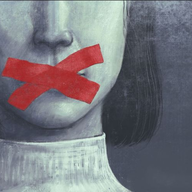
Free speech is a fundamental value of liberal politics, an expression of John Stuart Mill's promise that we can do and say anything , so long as we do no harm. It's a false promise. Absolute free speech was always a ruse. Speech has never been entirely free. It can't…
In Medias Res
Your weekly digest for all things Theopolis.