Liberal polities claim to lack competency in religious matters, and so they leave them to private choice. It sounds modest. It isn't. If it were truly modest about its incompetency, it would seek guidance from the competent - that is, from religious organizations that can guide the state in deciding, for instance, what is and is not religion. That prospect induces uneasiness, and D.C. Schindler thinks that this unease shows that “the state's claim not to be competent in religious matters, and to restrict itself simply to peace (and perhaps also to justice” in the political order, is a delusion. Is it possible to admit that one does not have competence in a particular area without opening oneself to the authority of one who does?” ( Communio , 2013, 602).
Schindler develops the point by stressing the curious character of limits: “To paraphrase a famous insight from Hegel, you can properly determine a limit only if you are already in some sense beyond it (a fish that has never been outside of the pond has no idea where the water ends and the air begins).” Thus, “a limit cannot justly be self-imposed by what is limited . . . but has to be in some basic respect received from what lies outside that limit. In other words, one can be genuinely limited only by reference to some real other, and so the determination of a limit cannot but occur in obedience. To impose a limit on oneself, by oneself, is to make a judgment about what lies beyond, to claim implicitly a competence in the matter, and thus to usurp the authority the other ostensibly possesses” (602).
Schindler illustrates by reference to early modern science, which professed “incompetence regarding larger questions of meaning, which it left to philosophy and theology.” The result, though, was that science was sealed off from “any significant relation to what lies beyond it: it cannot be informed in any way by philosophy and theology.” The self-limitation thus “effectively absolutizes the positivism of scientific thought, and so its tendency to encroach on philosophy and theology, and its drive to a materialistic reduction of the realities it studies, is not so much a betrayal of the modesty it claims for itself as it is a logical expression of it” (602-3).
So too the self-limitation of the liberal state inverts into an absolutism. Its modesty collapses into immodest hubris.
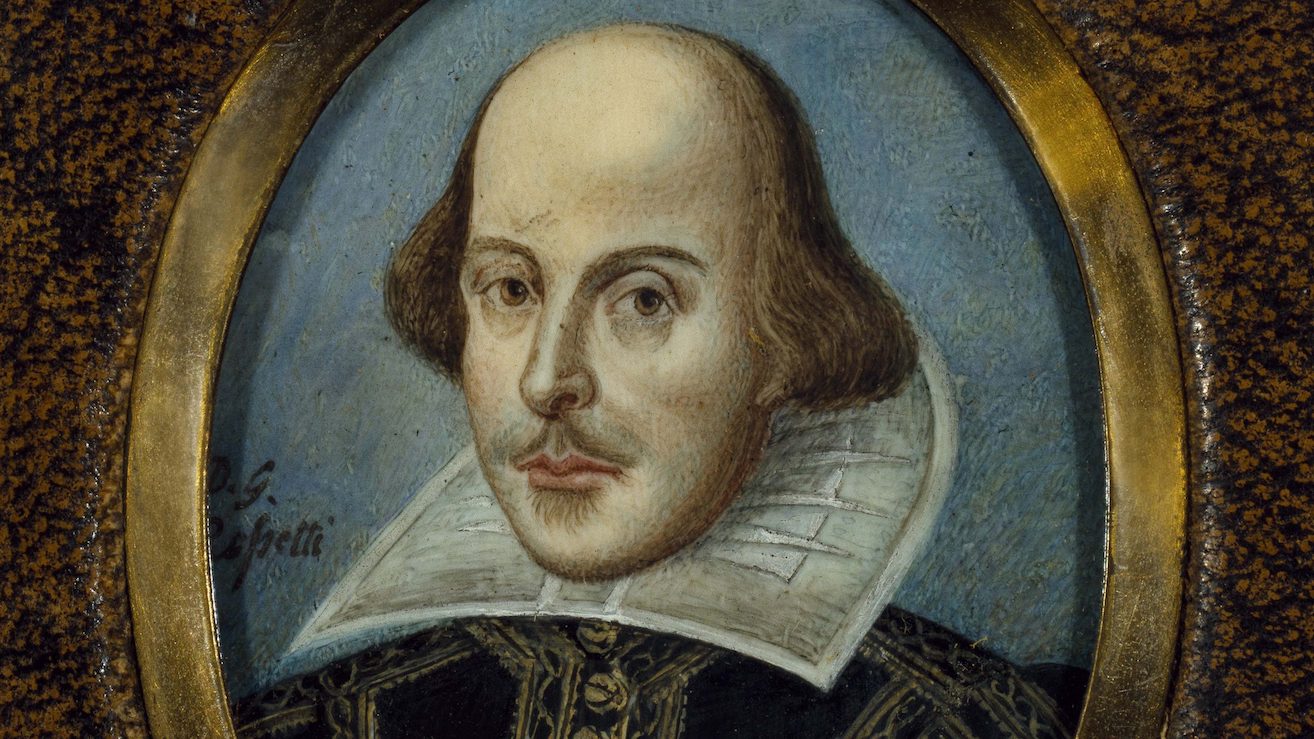
(Photo by Richard Dorrell.)
Peter Leithart
Peter J. Leithart is President of Theopolis Institute. He is the author of numerous books on theology, literature, and culture, including Theopolitan, Defending Constantine, and Baptized Body.
More from Liberalism
Continue reading related articles
Ecclesiocentrism
Ecclesiocentrism is both a theoretical framework and a practical agenda for a Christian politics after liberalism. THEORY 1. The gospel is an inherently political message, announcing the Lordship and Kingship of Jesus. 2. Christian political theory is ecclesiology. Or, more moderately, no political theory can be Christian without a central…
World After Liberalism
In A World After Liberalism , Matthew Rose takes note of a generational change taking place in American conservatism. Younger conservatives associated with the alt right don’t read the same writers as their elders: “Instead of William Buckley it is Curtis Yarvin. Instead of Milton Friedman it is Peter Thiel.…
Kingdom of Cupidity
Writing in the 1670s, Pierre Nicole turned the pessimistic anthropology of Jansenism into an apology for liberal order. "Men," he wrote, "being devoid of charity out of the derailment of sin, remain none the less filled with needs and are dependent on one another in countless ways." How can these…
In Medias Res
Your weekly digest for all things Theopolis.