
In his 1888 treatise on Christian Charity in the Ancient Church (7-9), Gerhard Uhlhorn contrasts pagan liberality with Christian charity. He acknowledges that pagan liberality was considerable, but that did not make it identical to the Christian virtue.
“Liberality is the heathen virtue which corresponds to the compassionate love, the caritas of Christianity; but it is just as different from that love as is heathendom itself from Christianity. The compassionate love of the Christian looks at necessity as the first thing; it cares not to inquire who the needy man may be in other respects, but is rather concerned to know whether he be really in distress.”
Liberality is more discriminating: “Presents are made and given, not with a view to the relief of distress, but rather with an eye to pleasing the recipient; and even in cases where the necessaries of daily life constitute the substance of the gift, no inquiry is made into the needs to individuals.” It is also socially discriminating: “For the most part, the presents are limited to the circle of citizens; and where they go beyond this limit, where strangers also have a share in the distribution of corn, and a place at the banquets, or where a bath stands free and open for strangers and travellers, this is due not to any regard for their possible wants, but simply to a desire to enhance the splendor of the liberality.”
At base, the difference is between gifts directed toward the needs of the needy and gifts that enhance the repute of the giver: “The fundamental distinction between the ancient liebralitas and the Christian caritas lies in this, that the latter always keeps in view the welfare of the poor and needy . . . whereas the Roman, who exercises the virtue of liberality, considers in reality himself alone (I do not mean always in a bad sense), and exercises his liberality as a bribe wherewith to win the favours of the multitude.” In sum, “Christian charity is self-denying; heathen liberalitas is at bottom self-seeking, even although personal selfishness is limited by the interests of the commonwealth.”
With this, Uhlhorn highlights one of the ways in which the gospel has made a deep and intractable impression on the Western conscience.
Peter Leithart
Peter J. Leithart is President of Theopolis Institute. He is the author of numerous books on theology, literature, and culture, including Theopolitan, Defending Constantine, and Baptized Body.
More from Uncategorized
Continue reading related articles

Cautions About Conversion
Wisdom from my old friend and colleague, Rev. Rich Bledsoe, on conversion . People "meet" Jim Jordan, and have the bracing thrill of escaping the flatness of just living and being in the 21st century. They might take off to the thrilling different world of Eastern Orthodoxy. They experience the…

Spousal Body
John Paul II ( Man and Woman He Created Them: A Theology Of The Body , 181-5) argues from Genesis that “‘alone,’ the man does not completely realize [his] essence.” Without the woman, Adam does not possess the “basic conditions that make it possible to exist in a relation of…
At the Right Hand
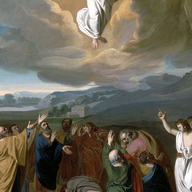
Forty days after Jesus rose from the dead, He ascended into heaven to take His place at the right hand of the Father (Acts 1:3), fulfilling the promise of Psalm 110. The Psalm is patterned as three sets of seven clauses. Verses 1-2 make up the first sequence, verses 3-4…
In Medias Res
Your weekly digest for all things Theopolis.