
A TLS review of two books of the Cambridge Companion to Cormac McCarthy notes the hints of holiness in his novels:
“Often in his work, however, there are residual glimmers of the numinous. McCarthy, who was raised a Roman Catholic, is often read as an unconventional religious writer, or Christian existentialist, even if his is a decidedly negative theology. ‘The Priest’s Tale,’ a mock-scholastic section of The Crossing . . . dedicated to saying what God is not. The Road can be read as a via negativa , until we reach the end of the book, which suggests a more positively Christian consolation. In much of McCarthy’s work, God, though often invoked, has receded to such a distance from earthly violence and suffering that his existence seems moot. In Outer Dark , a tinker observes: ‘I’ve seen the meanness of humans till I don’t know why God ain’t put out the sun and gone away.’ With God so far removed, the sublunary world often seems more like the demesne of some cruel demiurge; as various contributors to the Companion point out, Gnosticism interests McCarthy (as it does other important post-war writers like Burroughs and Pynchon), not least as a rich vein of metaphor.”
Peter Leithart
Peter J. Leithart is President of Theopolis Institute. He is the author of numerous books on theology, literature, and culture, including Theopolitan, Defending Constantine, and Baptized Body.
More from Uncategorized
Continue reading related articles
Cautions About Conversion
Wisdom from my old friend and colleague, Rev. Rich Bledsoe, on conversion . People "meet" Jim Jordan, and have the bracing thrill of escaping the flatness of just living and being in the 21st century. They might take off to the thrilling different world of Eastern Orthodoxy. They experience the…
Spousal Body
John Paul II ( Man and Woman He Created Them: A Theology Of The Body , 181-5) argues from Genesis that “‘alone,’ the man does not completely realize [his] essence.” Without the woman, Adam does not possess the “basic conditions that make it possible to exist in a relation of…
At the Right Hand
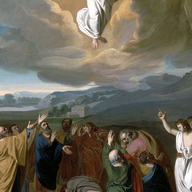
Forty days after Jesus rose from the dead, He ascended into heaven to take His place at the right hand of the Father (Acts 1:3), fulfilling the promise of Psalm 110. The Psalm is patterned as three sets of seven clauses. Verses 1-2 make up the first sequence, verses 3-4…
In Medias Res
Your weekly digest for all things Theopolis.