
Milbank points out in detail how the sacred/secular dualism was undermined in medieval life: “monasteries were also farms . . . the church saw to the upkeep of bridges which were at once crossing places and shrines to the Virgin . . . the laity often exercised economic, charitable, and festive functions in confraternities that were themselves units of the church as much as parishes, and therefore occupied not unambiguously secular space.”
He adds that “the first freely shaped voluntary associations in the Christian West tended to be religious ones: the various religious and lay orders did not see constitution making (any more than canon law itself) as at variance with the idea that the constituted body was itself a divinely instituted gift and event of grace.”
On the other side, “the supreme laymen, namely kinds, were anointed, and assumed that they had thereby received a Christic office in another aspect to that received by the priesthood: Christ being understood following the New Testament as fulfilling the office of prophet, priest, and king.”
Peter Leithart
Peter J. Leithart is President of Theopolis Institute. He is the author of numerous books on theology, literature, and culture, including Theopolitan, Defending Constantine, and Baptized Body.
More from Uncategorized
Continue reading related articles
Cautions About Conversion
Wisdom from my old friend and colleague, Rev. Rich Bledsoe, on conversion . People "meet" Jim Jordan, and have the bracing thrill of escaping the flatness of just living and being in the 21st century. They might take off to the thrilling different world of Eastern Orthodoxy. They experience the…
Spousal Body
John Paul II ( Man and Woman He Created Them: A Theology Of The Body , 181-5) argues from Genesis that “‘alone,’ the man does not completely realize [his] essence.” Without the woman, Adam does not possess the “basic conditions that make it possible to exist in a relation of…
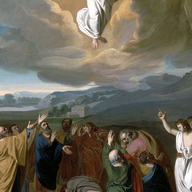
At the Right Hand
Forty days after Jesus rose from the dead, He ascended into heaven to take His place at the right hand of the Father (Acts 1:3), fulfilling the promise of Psalm 110. The Psalm is patterned as three sets of seven clauses. Verses 1-2 make up the first sequence, verses 3-4…
In Medias Res
Your weekly digest for all things Theopolis.