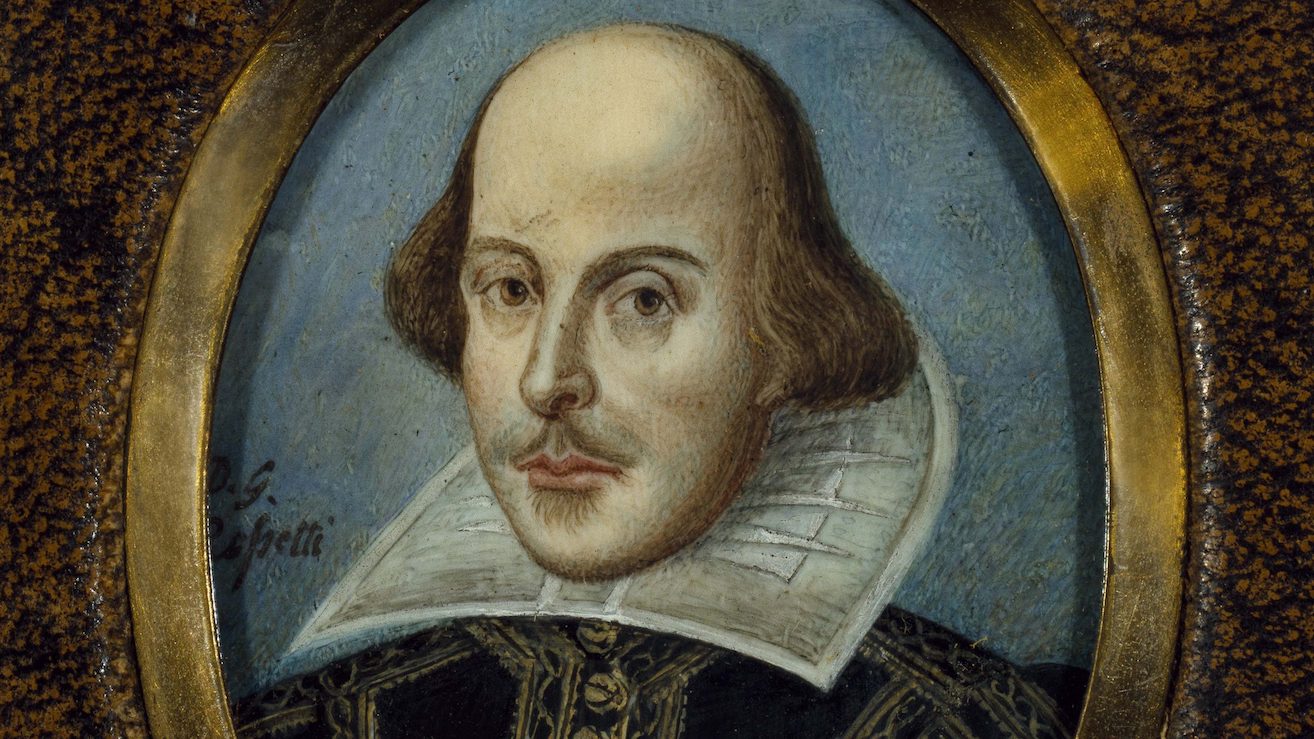
Bruce Holsinger’s book, The Premodern Condition , is reviewed in the April 14 issue of TLS. Holsinger is tracing the rise of theory in France of the 1960s, and shows that the avant garde was “surprisingly heavily indebted to medievalism.” He describes their relationship to the medieval past as “sacramental” in that they attempted to find in the Middle Agtes “a past with efficacy in the present.”
Thus, Georges Bataille (!) found his taste for literature renewed by the Angela of Foligno’s mystical Book of Vision and imitated the style of Aquinas. Further, “he translated, edited and researched medieval literature, contributing medieval poems to a Surrealist compilation, and even writing an essay on medieval desire and Christian morality . . . . In The Accursed Share , medieval Europe is Bataille’s prime model for an economy of superfluity and excess, squandering money on extravagant buildings without direct productivity.” Hence, the Middle Ages serves for Bataille as not only an “Other of modernity” but also “a rich resource for alternative modes of thinking.”
Pierre Bourdieu likewise developed his theory of habitus not only in conversation with Mauss, but also through his translation of Erwin Panofsky’s Gothic Architecture and Scholasticism . He argues that “Lacan seems to have been partly attracted to the immediate air of scholarliness that a reference to an obscure . . . medieval manuscript lends” and Holsinger also finds “a medievalist’s love for the archaic in Lacan’s method of psychoanalysis as well as in his argumentative style.”
Derrida challenges Rousseau’s discussion of medieval music in critiquing the “Enlightenment master narrative of progress from the Middle Ages to modernity.” Barthes’s owes an “unacknowledged debt to Henri de Lubac’s exposition of medieval biblical exegesis,” and in his work “Barthes translates the medieval method of reading for the four senses of scripture . . . into a system of four or five ways of reading literature.”
Holsinger employs eucharistic imagery in developing his historiography: He “uses Christian terminology to gesture towards a sacramental, liturgical, awed relation to the past as an alternative to the Enlightenment stances of superiority. The ritual of mass, commemorating through re-enactment, the presence of a past sacrifice in the eucharist, and a sense of wonder rather than an attempt at analysis are all invoked as alternative models to a strictly chronological, hierarchical relation of present to past.” And he criticizes Radical Orthodoxy for failing to recognize “that their demands for a more liturgical understanding of the Middle Ages had already been met by Derrida.”
Peter Leithart
Peter J. Leithart is President of Theopolis Institute. He is the author of numerous books on theology, literature, and culture, including Theopolitan, Defending Constantine, and Baptized Body.
More from History
Continue reading related articles
Realness of Things Past
Greg Anderson began thinking about the thesis of his Realness of Things Past while working on a book on the “state” in classical Greece. He discovered there was no such thing as an Athenian “state,” and that conclusion led him to question the way historians do history. Instead of running…
The Power of the Margins
David Martin (1929-2019) was a secularization skeptic. He acknowledged that modern societies typically undergo a process of "differentiation," in which various sectors of social and political life free themselves from the oversight of religious authority. He acknowledged that in many modern societies religious institutions and values are "marginalized." But he…
Zwinglian Symbolism
Nathan Mitchell (writing in the Oxford History of Christian Worship , 324) denies that Zwingli taught a "mere symbolist" according to which the Supper "simply served to remind believers of the great benefits bestowed on them through Christ's passion and death." Zwingli wasn't a symbolist "in any modern sense." Mitchell…
In Medias Res
Your weekly digest for all things Theopolis.