
Georg Simmel wrote, “Money, with all its colorlessness and indifference, becomes the common denominator of all values; irreparably it hollows out the core of things, their individuality, their specific value, and their incomparability. All things float with equal specific gravity in the constantly moving stream of money. All things lie on the same level and differ from one another only in the size of the area which they cover.”
Measuring value in monetary terms is deeply erroneous. It is certainly possible to monetize the value of telling a bedtime story, or pushing your kids on the swing at the park, or taking your wife for an evening out, but the monetary calculation does not, for obvious reasons, come close to expressing real value. Yet, we are tempted by our economic order to evaluate everything in terms of money, so that if something is more expensive it must therefore be more valuable. But God is the one who assesses value, not the capitalist economy, and the highest things that God values are His kingdom, righteousness, and the pursuit of holiness; what does the Lord value but humility and justice and compassion.
Peter Leithart
Peter J. Leithart is President of Theopolis Institute. He is the author of numerous books on theology, literature, and culture, including Theopolitan, Defending Constantine, and Baptized Body.
More from Economics
Continue reading related articles
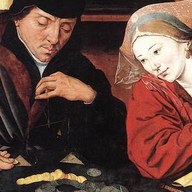
Politics of Price
What determines prices? Supply and demand, says anyone with a modicum of training in economics. Right, says Barry C. Lynn ( Cornered ): "In any open market that is populated by many small buyers and many small sellers, if the producers try to raise their prices high enough to make…
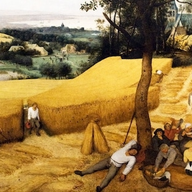
Scarcity
Once, argues Nicholas Xenos ( Scarcity and Modernity ), “scarcity” did not exist. What existed with “scarcities,” or “periods of scarcity.” He writes, “Of medieval origin, ‘scarcity’ derives from the Old Northern French escarcete . Its original usage denoted an insufficiency of supply, and by the fifteenth century the word…
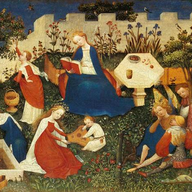
Between Garden and City
Andrew Kuiper offers a superb, exhilarating summary of Sergei Bulgakov’s Philosophy of Economy . Kuiper begins by summarizing Bulgakov’s case against “economism,” the assumption shared by free marketeers and Marxists that human beings are motivated above all by economic drives. For both, man is homo economicus . Bulgakov had read…
In Medias Res
Your weekly digest for all things Theopolis.