
According to Eugen Rosenstock-Huessy’s cross of reality, individuals are always stretched out on a cross, in four directions - to the past and to the future, to the inside and to the outside. Growth and maturity come when we endure the cross in faith that when we are torn to pieces we will yet by revived, that our death on the cross of reality is the gateway to life. Like Jesus, we are glorified through the cross.
Churches are also on the cross.
Churches are called to remain faithful to the past while also boldly embracing the novelty of the future; called to cultivate a distinctive language and culture inside the community, while also listening attentively to voices from outside.
Life would be much easier if we could ignore one or the other poles of the cross. Life would be much easier if we could retreat to a pure inside and ignore the outside; life would be much easier if we could rest in the securities of the past rather than face the uncertainties of the future.
Life is easier off the cross, but if we get off the cross, we will never grow up.
At the 2007 GA, the PCA attempted to remove itself from the cross, retreating into the safety of the past and denouncing those willing to listen to voices outside.
This is safe. This is easy. But this is not the path to greater maturity or deepening reformation. Because unless we are torn, we will never grow.
Peter Leithart
Peter J. Leithart is President of Theopolis Institute. He is the author of numerous books on theology, literature, and culture, including Theopolitan, Defending Constantine, and Baptized Body.
More from Theology
Continue reading related articles
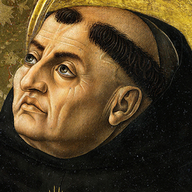
In Praise of Thomas
Gotta love ol’ Tommaso d’Aquino, a.k.a. Thomas Aquinas. The margins of my various copies of his works are full of notes of disagreement and question marks, but still: His toss-off arguments are usually deeper than the sustained arguments of lesser theologians. Here’s a pot pourri from the early part of…
Hoping For Love
In his 2007 encyclical on hope, Spe Salvi , Pope Emeritus Benedict XVI observes that the experience of loving and being loved is a moment of “redemption.” Love gives new meaning, new joy, new energy. Every love is a new birth. We long and hope for love. We want it…
Is All That's In God God?
Divine simplicity is often summarized in the axiom, "All that's in God is God." If this is taken at face value, though, it conflicts with Trinitarian orthodoxy. 1) By this axiom, the Persons are identical with the essence of God. 2) But the Persons have (or are) identifying particularities or…
In Medias Res
Your weekly digest for all things Theopolis.