
Back in 1944, Walter Oakes predicted Marxianly that late capitalism would naturally develop a “permanent war economy.” Defining a war economy as one where “the government’s expenditures for war . . . become a legitimate and significant end-purpose of economic activity.” Capitalism, Oakes claimed, seeks equilibrium that reduces unemployment and thus keeps political upheaval in check. Maintaining high levels of defense spending in peacetime was one of capitalism’s tools to maintain the privileges of the privileged and to keep the workers subordinate.
Thomas Duncan and Christopher Coyne agree that the US has a “permanent war economy,” but they dispute Oakes’s account of its causes:
“Instead of viewing the emergence of the permanent war economy as a natural step in the evolution of the capitalist system, we emphasize the combined efforts of the interest groups (unions, industry, military, and politicians) that arose in the context of the dual crises of the Great Depression and World War II. As such, our explanation emphasizes that the permanent war economy is not a problem of capitalism, but instead a problem of government and [a lack of] constraints upon government interventions into the private economy. From this perspective the permanent war economy was not implemented to save capitalism, but instead resulted from narrow interests pursuing their own agendas in the context of an interventionist government.”
Military spending has infiltrated everywhere: “As these federal funds filter through subcontractors and supportive non-military firms and organizations, the federal defense impact on the private sector is both broad and deep, influencing ‘professional and business services, financial, information and administrative services, retail trade, leisure and hospitality services, education and health services, construction, and other manufacturing’” (quoting Stephen Fuller).
Peter Leithart
Peter J. Leithart is President of Theopolis Institute. He is the author of numerous books on theology, literature, and culture, including Theopolitan, Defending Constantine, and Baptized Body.
More from Uncategorized
Continue reading related articles

Cautions About Conversion
Wisdom from my old friend and colleague, Rev. Rich Bledsoe, on conversion . People "meet" Jim Jordan, and have the bracing thrill of escaping the flatness of just living and being in the 21st century. They might take off to the thrilling different world of Eastern Orthodoxy. They experience the…
Spousal Body
John Paul II ( Man and Woman He Created Them: A Theology Of The Body , 181-5) argues from Genesis that “‘alone,’ the man does not completely realize [his] essence.” Without the woman, Adam does not possess the “basic conditions that make it possible to exist in a relation of…
At the Right Hand
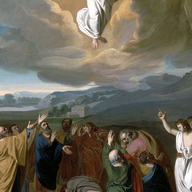
Forty days after Jesus rose from the dead, He ascended into heaven to take His place at the right hand of the Father (Acts 1:3), fulfilling the promise of Psalm 110. The Psalm is patterned as three sets of seven clauses. Verses 1-2 make up the first sequence, verses 3-4…
In Medias Res
Your weekly digest for all things Theopolis.