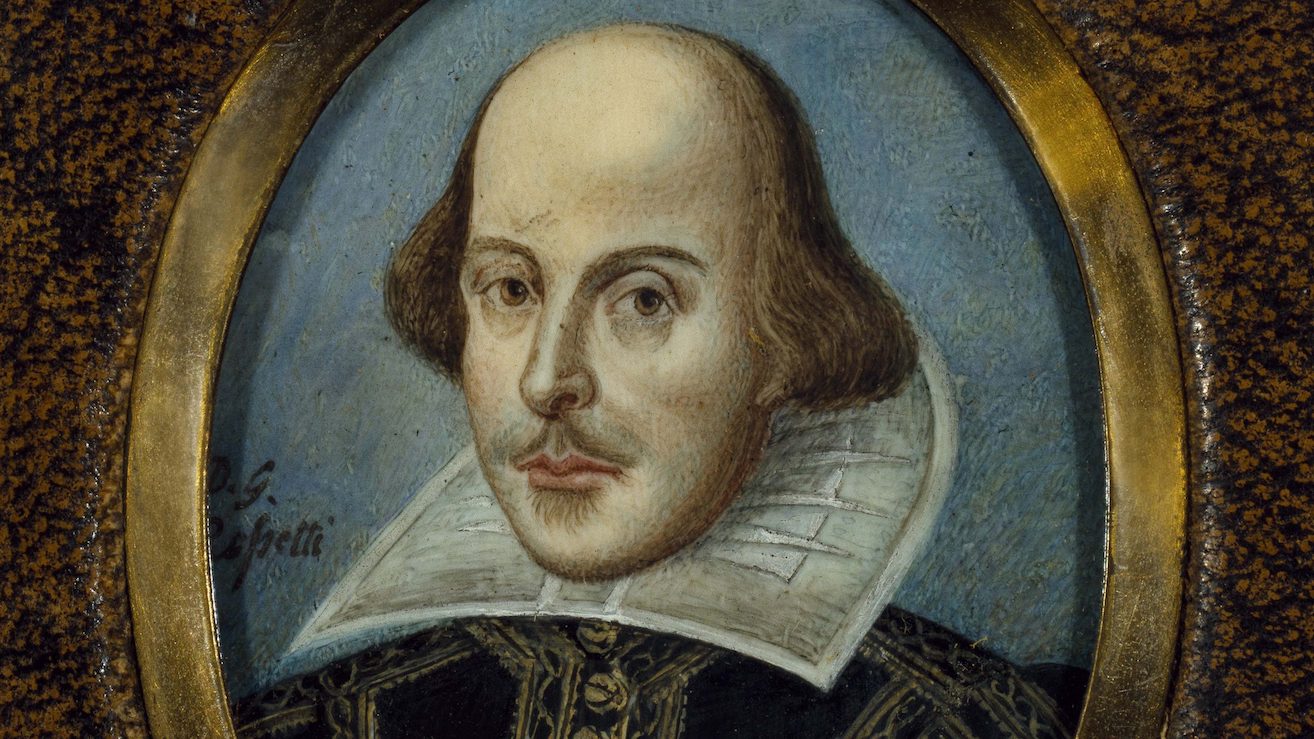
In a TLS exchange with Timothy Williamson on the uses of philosophy, Roger Scruton argues that philosophy's task is to preserve humanity's humanity, the subjectivity that sets us apart from the rest of the world. Philosophy mans the boundaries between objective science and humanism, especially aesthetics. Scruton writes that the philosopher's task is to "distinguish genuine science from mere scientism. Philosophy is, and ought especially to be, a handmaiden to the humanities. It should use its best endeavours to show why the attempts to rewrite religion, politics, musicology, architecture, literary criticism and art history as branches of evolutionary psychology (or still worse, branches of applied neuroscience) are destined to fail. It should be intent on distinguishing the human world from the order of nature, and the concepts through which we understand appearances from those used in explaining them." Philosophy insists that I am "not an object only; I am also a subject, one with a distinctive point of view. The subject is in principle unobservable to science, not because it exists in another realm but because it is not part of the empirical world." It "shows what self-consciousness is, and explores the many ways in which the point of view of the subject shapes and is shaped by the human world." Williamson points to a flaw in what he calls "Scruton’s schematic opposition between science and points of view": It doesn't do "justice to the complexity and interrelatedness of actual inquiry." There's a more fundamental objection: It doesn't do just to the nature of reality. If God is, and if God speaks in creation, then there is no realm of pure objectivity, no impersonal space for science to develop. It seems that Scruton's severe opposition between science and the humanities, far from protecting us from scientism, is actually the condition of the possibility of scientism. This dualism should, like many modern dualisms, be subjected to a deconstructive dissolution.
Peter Leithart
Peter J. Leithart is President of Theopolis Institute. He is the author of numerous books on theology, literature, and culture, including Theopolitan, Defending Constantine, and Baptized Body.
More from Philosophy
Continue reading related articles
Substance or Tune?
Jonathan Edwards didn’t think the world is a machine. At the heart of the mechanistic interpretation of Newtonian physics, he discerned, was the notion that “bodies” are (in Robert Jenson’s words) “the sort of thing that either can or cannot act ‘properly by themselves.’” The mechanistic world picture involved an…
Paul's Idol Polemics
Joshua Jipp argues that Paul's Areopagus address contains both critique and propaganda, critique of Athenian superstition, lust for novelty, and idolatry, and propaganda in favor of Christian faith as a more consistent fulfillment of the aspirations of Hellenistic philosophical theology. Much of the critique, Jipp shows, is drawn from Isaiah's…
Of Causes and Effects
This essay was first published in The Theopolitan, a weekly newsletter for Theopolis Partners. To become a Partner, you must donate at least $500 per year or $50 per month. Give here . Craig Carter’s Thesis #2 about Trinitarian classical theism ( Contemplating God with the Great Tradition ) is,…
In Medias Res
Your weekly digest for all things Theopolis.