
Progress, Eugen Rosenstock-Huessy points out ( Christian Future ), was originally a plural term. “ Les progres ” was Condorcet’s phrase. What he had in mind were improvements, new gadgets and machines and gizmos.
The singular form of the term came from early Christianity and referred to the spiritual improvement of man. Clearly, the plural and singular don’t necessary move in unison: “Bombs get better all the time,” Rosenstock points out, but we are making progress in the original sense only in “NOT-using” them (77).
The two dimensions of the term came together in the nineteenth century “The distinction between the progress of the soul as instituted by the Christian era, and les progres , multiplied by applying the idea to the new fields of arts and sciences, was obliterated by an ambiguity in English which is not rare. The English translators of Condorcet, and the Great World Exhibition in the Crystal Palace of London, and the Chicago Century of Progress, all used the singular, and thereby mixed the religious original and the technical applications into one unholy welter” (77).
Peter Leithart
Peter J. Leithart is President of Theopolis Institute. He is the author of numerous books on theology, literature, and culture, including Theopolitan, Defending Constantine, and Baptized Body.
More from Uncategorized
Continue reading related articles
Cautions About Conversion
Wisdom from my old friend and colleague, Rev. Rich Bledsoe, on conversion . People "meet" Jim Jordan, and have the bracing thrill of escaping the flatness of just living and being in the 21st century. They might take off to the thrilling different world of Eastern Orthodoxy. They experience the…
Spousal Body
John Paul II ( Man and Woman He Created Them: A Theology Of The Body , 181-5) argues from Genesis that “‘alone,’ the man does not completely realize [his] essence.” Without the woman, Adam does not possess the “basic conditions that make it possible to exist in a relation of…
At the Right Hand
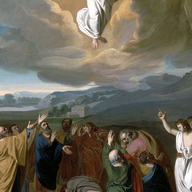
Forty days after Jesus rose from the dead, He ascended into heaven to take His place at the right hand of the Father (Acts 1:3), fulfilling the promise of Psalm 110. The Psalm is patterned as three sets of seven clauses. Verses 1-2 make up the first sequence, verses 3-4…
In Medias Res
Your weekly digest for all things Theopolis.