
In the Guardian today, Linda Woodhead explores the dilemmas of religious liberty. On the one hand is the “libertarian” approach favored by Americans, under which religious freedom is limited only when “it violates civil law or harms others.” In Europe, the more common approach is “secularist,” a system where “individuals should be free to express their religion in the privacy of their homes, churches or temples - but not in public.” Some European intellectuals “would even restrict the use of religious reasons in political debate arguing that only ‘universal’ secular reason is appropriate.”
Woodhead thinks both positions “go too far.” She favors the libertarian view that people should have freedom to practice their religion unless is clashes with the laws: “the law of the majority should not bear down unnecessarily hard on minorities.”
Yet no one has the freedom, for example, to deny a gay couple a room in a B&B because “here the exercise of religious freedom clashes with equality law.” She defends this by insisting that “majorities have rights too. If you wish to ignore what a majority has decided to be true or lawful, your action is likely to be costly to wider society - and why should the majority bear the cost of your dissent?”
Extended to their logical conclusions, both views are “careless of democracy,” libertarians because they reserve the right to opt out of democratic decisions and secularists because they trample the rights of religious minorities. Libertarians are right that dissent doesn’t necessarily bring and end to everything, but libertarians should realize that they can submit to “democratic will” without being humiliated.
This is bracing for its honest assessment of the dilemmas of religious liberty in today’s world. It is also worrying for its blithe blindness to the possibility that democratic will might be tyrannical. The key to her argument is the notion that majorities can decide what is ” true or lawful.” What if a majority decides that circumcision is unlawful or that public schools shouldn’t have crucifixes (two of the European cases that provoked Woodhead’s article)? What if a majority decides that saying “Jesus is Lord” is untrue or socially dangerous?
If majority tyranny is to be limited, then majorities cannot decide truth , but have to be judged by some external standard of truth. But to acknowledge an external standard of truth would mean to re-orient and remake modern democracy itself; that would be a game-changer. Without such a game-changer, though, it is impossible to find our way out of the dead-ends that Europeans and increasingly Americans have made for themselves.
Peter Leithart
Peter J. Leithart is President of Theopolis Institute. He is the author of numerous books on theology, literature, and culture, including Theopolitan, Defending Constantine, and Baptized Body.
More from Politics
Continue reading related articles

Political Gospel
The gospel isn't an apolitical message that happens to have political implications. It’s not a message of private salvation with downstream public consequences. Exactly the opposite. The gospel is public and political truth with personal consequences. All the vocabulary of the gospel is political. The Greek word for “gospel” –…

When Idolaters Move In
What should Christians do if we discover there are idolaters living down the street? Lots of tangles in the question. For better or worse, the U.S. Constitution guarantees freedom of religion. We can debate whether or not the Framers intended the Constitution to protect Hindus and Muslims. In actual legal…
Free Speech
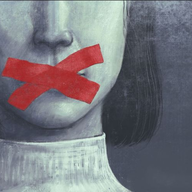
Free speech is a fundamental value of liberal politics, an expression of John Stuart Mill's promise that we can do and say anything , so long as we do no harm. It's a false promise. Absolute free speech was always a ruse. Speech has never been entirely free. It can't…
In Medias Res
Your weekly digest for all things Theopolis.