
Jonathan Arnold’s Sacred Music in Secular Society poses a question and offers an answer.
Sacred music is popular: Witness the sales of chant albums, the popularity of the Tallis Scholars, the Sixteen, and other groups.The question is why music composed for liturgy or with liturgical interests, music once used in liturgical contexts is still popular. Is something more than aesthetic going on?
Arnold thinks so. Regardless of the faith of the listener, or the composer, “the attraction of beautiful and profound harmony echoes the message and ministry of Christ by appealing to much the same desires deep in human souls. Those desires . . . still clearly exist whether an age is considered to be secular or Christian; the popularity of sacred music today presents the opportunity to invite people back to faith who may have confused it with organized, institutional religion.” The dissolution of the sacred into the secular, of the liturgy into the concert hall, isn’t a problem but holds the possibility to lead people back to the worship that originally inspired the music (11). In the meantime, sacred music “meets a deep and intrinsic human need for the spiritual, mystical, transcendent, or unearthly” (150).
It’s an interesting question and an engaging argument, but the best part of Arnold’s book is his chosen method: He attempted to answer the question by interviewing composers (James MacMillan, for instance), performers (Peter Phillips), and philosopher/theologians who have thought about and written on music (Roger Scruton, Rowan Williams). Large portions of the book consist of transcriptions of these interviews, and they are a treat.
MacMillan states Arnold’s thesis: “There’s an acknowledgement, if the listener is intelligent, of the civilization that gave rise to [the music]. But I think also, if they’re sensitive, they’re aware of something much, much deeper than that. That they may not be able to relate to in a confessional way anymore but they acknowledge . . . that there’s something profoundly religious going on in these concert encounters with Bach.” People listen to Bach to “hear the whole range of different perceptions of the numinous” (34). MacMillan has a prescription for the revival of liturgical music too: “If we go back to the great paradigmatic song fare we would ennoble the liturgy once again and make it Godward in its orientation” (35). For MacMillan, that fare is fundamentally plainchant. It was worth the price of the book to learn that MacMillan leads a choir of untrained singers in his Glasgow parish.
Rowan Williams expresses his love for Mozart Masses, but admits “I find them very difficult in a liturgical context because they are quite clearly dominated by an architecture that is musical, not liturgical” (93). Like MacMillan, he endorses plainsong because it “doesn’t expect you to come up with the required emotions: you know, press a button and the emotions come. Because it’s repetitive it assumes that you are prepared to take time, and that’s significant” (95). According to Williams, sacred music is crucially defined by the events it narrates: “the music so carries the narrative that you’re present in it and with it” (96).
Arnold is an intelligent guide, who knows when not to intrude. It’s a rare pleasure to have the opportunity to listen in on his conversations.
Peter Leithart
Peter J. Leithart is President of Theopolis Institute. He is the author of numerous books on theology, literature, and culture, including Theopolitan, Defending Constantine, and Baptized Body.
More from Music
Continue reading related articles
Exultant Singer
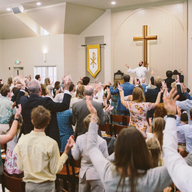
The Lord your God is in your midst, a mighty One who will save; he will rejoice over you with gladness; he will quiet you by his love; he will exult over you with loud singing. — Zephaniah 3:17 The God who commands song is Himself an exultant Singer. Zephaniah…
The God Who Sings
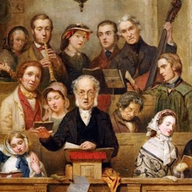
Yesterday, I preached the first in a series of sermons on liturgical music. Here's a snippet of the sermon. We’ve all been swept away by music. Maybe it was a live performance by a favorite band or of a favorite symphony. Perhaps it happens while you’re fixing dinner and Alexa…
How the Church Lost Its Soundscape
The following was first published in 2011 at Firstthings.com . “By the twelfth century,” Christopher Page writes in his magisterial The Christian West and Its Singers (2010), “the Latin West could be imagined as a soundscape of Latin chant.” From the eighth-century alliance of Pope Stephen with the Frankish King…
In Medias Res
Your weekly digest for all things Theopolis.