
R. Chris Hassel has compiled a dictionary of every religion-related work he could find in Shakespeare's plays and poems. The entries in Shakespeare's Religious Language are usually divided into three parts - a definition, a compilation of Shakespeare's uses of the term, and references to contemporary or near-contemporary writers (Donne and Lancelot Andrewes come up a good deal) who use the same term. Shakespeare's biblical allusions have been covered before, so Hassel focuses on theological and ecclesial terminology, or on words that in some cases take on religious connotations.
In a scholarly world that has awakened to Shakespeare's theological interests, it's a valuable reference work, especially for its defintions of terms that are no longer current (“compt” or “sacring” or “shrift”) and terms whose religious connotations might not be obvious (“enemy” as a reference to Satan, for instance, or the pelican as an icon of Christ).
Much of the book, though, seems an extensive exercise in defining the obvious. What readers of Shakespeare couldn't recognize an allusion to Sinai when the plays talk about “Commandments”? Who needs a dictionary to tell us that “prodigal” refers to one of Jesus' parables? Or to be told who Solomon was? Does anyone really need a dictionary to tell them the various religious senses of the word “cross”? For whom are these entries revealing?
For scholars who didn't grow up in Sunday School or catechism class, that's who. And, come to think of it, that probably describes the majority of today's Shakespeare scholars. Useful as it is, Hassel's dictionary is as much a monument to scholarly ignorance as a scholarly tool. I can hardly peruse it without regretful astonishment at our cultural amnesia.
Peter Leithart
Peter J. Leithart is President of Theopolis Institute. He is the author of numerous books on theology, literature, and culture, including Theopolitan, Defending Constantine, and Baptized Body.
More from Shakespeare
Continue reading related articles
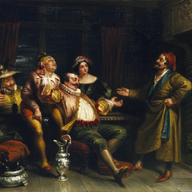
Call Me Malvolio
Call me Malvolio. I was lately the steward of the house of the great and famed Countess Olivia of Illyria. You may have heard of her. I had charge of my Lady’s household retinue, the maids and men who clean, cook, and care for the house. I do my work…
Truth, Love, Lies: Much Ado About Nothing
The following is an excerpt from my Brightest Heaven of Invention , published in the misty days of the mid-1990s. Claudio looks at Hero’s appearance, and concludes she is a maid, a virgin. Because of Don John’s deception, he believes that he has peeled away the deceptive outer layer, the…
Shakespeare the Christian?
W illiam Shakespeare was baptized on April 26, 1564. Baptized , but was he a Christian? The answer partly depends on what we think happens when someone is baptized. Many Christians believe that baptism marks the beginning of life as a Christian. I am one of those Christians. My short…
In Medias Res
Your weekly digest for all things Theopolis.