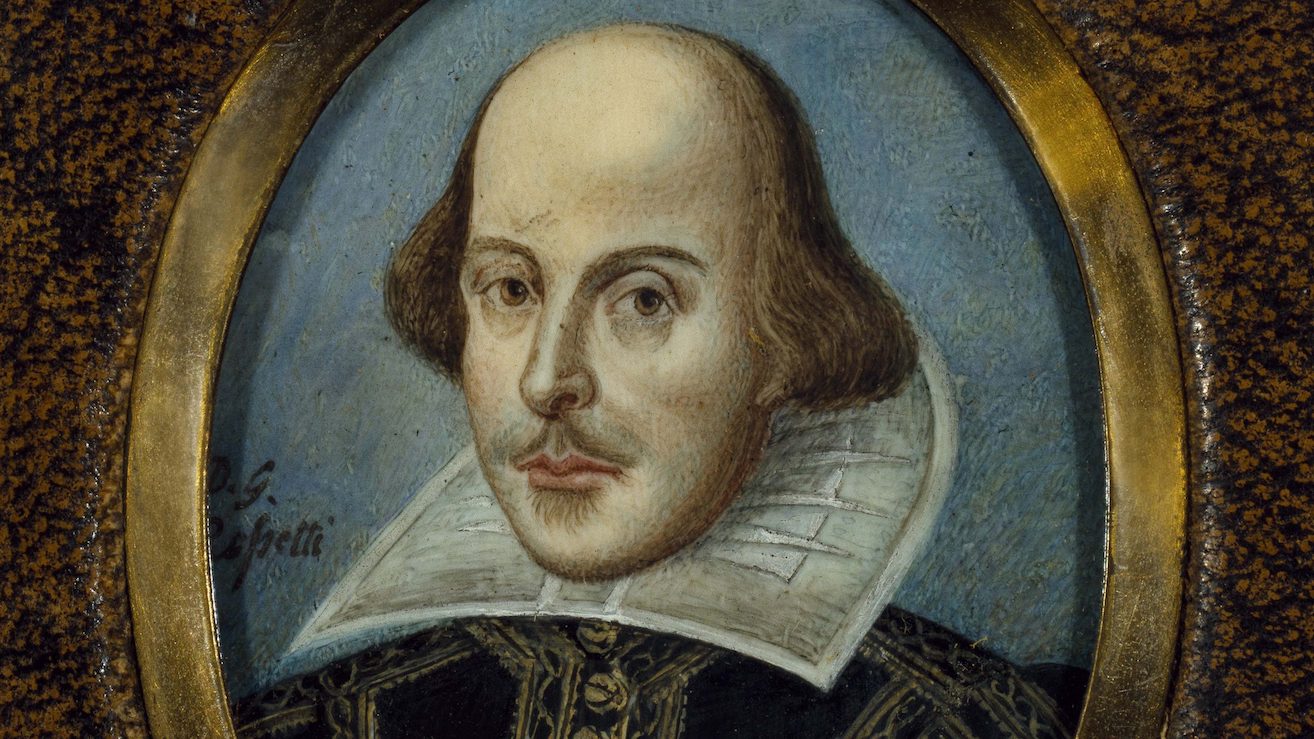
In his history of Russian culture, James Billington notes the influence of Shakespeare’s Hamlet on modern Russian thought and drama. It was “one of the first plays to be regularly performed on the Russian stage,” so that “Hamlet became a kind of testing ground for the Russian critical imagination.” The main reason “lay in the romantic fascination with the character of Hamlet himself. Russian aristocrats felt a strange kinship with this privileged court figure torn between the mission he was called on to perform and his own private world of indecision and poetic brooding.” Hamlet’s soliloquy, whose opening line was translated to Russian as “to live or not to live,” “became known in Russian thought as ‘the Hamlet question.’ It was the most deeply personal and metaphysical of all the ‘cursed questions’; and for many Russians it superseded all the others.”
A. Radischev was, Billington suggests, “perhaps the first to turn special attention to Hamlet’s monologue in his own last work: On Man, His Mortality and Immortality, and resolved the question by taking his own life thereafter, in 1802. The last decade of the eighteenth century had already seen a marked rise in aristocratic suicides.” This “‘world weariness’ was a Europe-wide phenomena,” but took special hold in Russia. Hamlet serves as “a kind of mirror” for the generation at the turn of the eighteenth century, and in this they tended to follow Hegel’s treatment of Hamlet: “Hegel had associated the melancholy and indecision of Hamlet with his subjectivism and individualism - his ‘absence of any formed view of the world’ or ‘vigorous feeling for life’ - problems besetting any modern man who stands outside the rational flow of history as a proud and isolated individuum.” Turgenev bemoaned the influence of Hamlet on the Russian character, contrasting Hamlet and Don Quixote in a famous essay that called for more reckless, idealistic activism to replace the Russian penchant for mournful brooding.
Russian interest in Hamlet continued into the 20th century. Pasternak wrote a brief poem on Hamlet (1948), presenting the Shakespearean hero as an isolated Christ-figure standing against oppression and hypocrisy. Here is the poem in a translation by Jon Stallworthy and Peter France:
The buzz subsides. I have come on stage. Leaning in an open door I try to detect from the echo What the future has in store.
A thousand opera-glasses level The dark, point-blank, at me. Abba, Father, if it be possible Let this cup pass from me.
I love your preordained design And am ready to play this role. But the play being acted is not mine. For this once let me go.
But the order of the acts is planned, The end of the road already revealed. Alone among the Pharisees I stand. Life is not a stroll across a field.
The Soviets, for their part, disliked Shakespeare’s prince, ridiculing him (in Billington’s words) “as a symbol of the brooding and indecisive old intelligentsia”: “A production of Hamlet during the period of the first five-year plan portrayed the Danish prince as a fat and decadent coward who recites ‘to be or not to be’ half-drunk in a bar. A critic of that period went so far as to claim that the real hero of the play was Fortinbras. He alone had a positive goal; and the fact that he came from victory in battle to pronounce the final words of the play symbolized rational, militant modernity triumphing over the ‘feudal morality’ of pointless bloodletting that had dominated the last act prior to his arrival.”
Peter Leithart
Peter J. Leithart is President of Theopolis Institute. He is the author of numerous books on theology, literature, and culture, including Theopolitan, Defending Constantine, and Baptized Body.
More from Literature
Continue reading related articles
God's Plenty
A few thoughts on the “General Prologue” to Chaucer’s Canterbury Tales . 1) The Prologue sets the stage for a multi-layered set of tales. The real-life Chaucer is, of course, the author, but in the Prologue, he introduces a fictional version of himself as narrator: It happened in that season…
Violence as Poetry
Paul and Jane Sinclair, protagonists of J.G. Ballard’s 2000 novel Super-Cannes , move from England to the French Riviera to live at a new high-tech business park, Eden-Olympia (!), after Jane’s friend and former lover, Dr. David Greenwood, goes on a killing spree that ends with suicide. Jane, a pediatrician,…

Memento Mori
Virtually all the characters in Muriel Spark’s 1959 novel, Memento Mori , are over 70. They suffer the physical humiliations of aging and the pains of regret. Unexpectedly, hilariously, they’re as competitive and petty as schoolchildren. Well into his 80s, Godfrey Colston scorns the crippled critic Guy Leets for the…
In Medias Res
Your weekly digest for all things Theopolis.