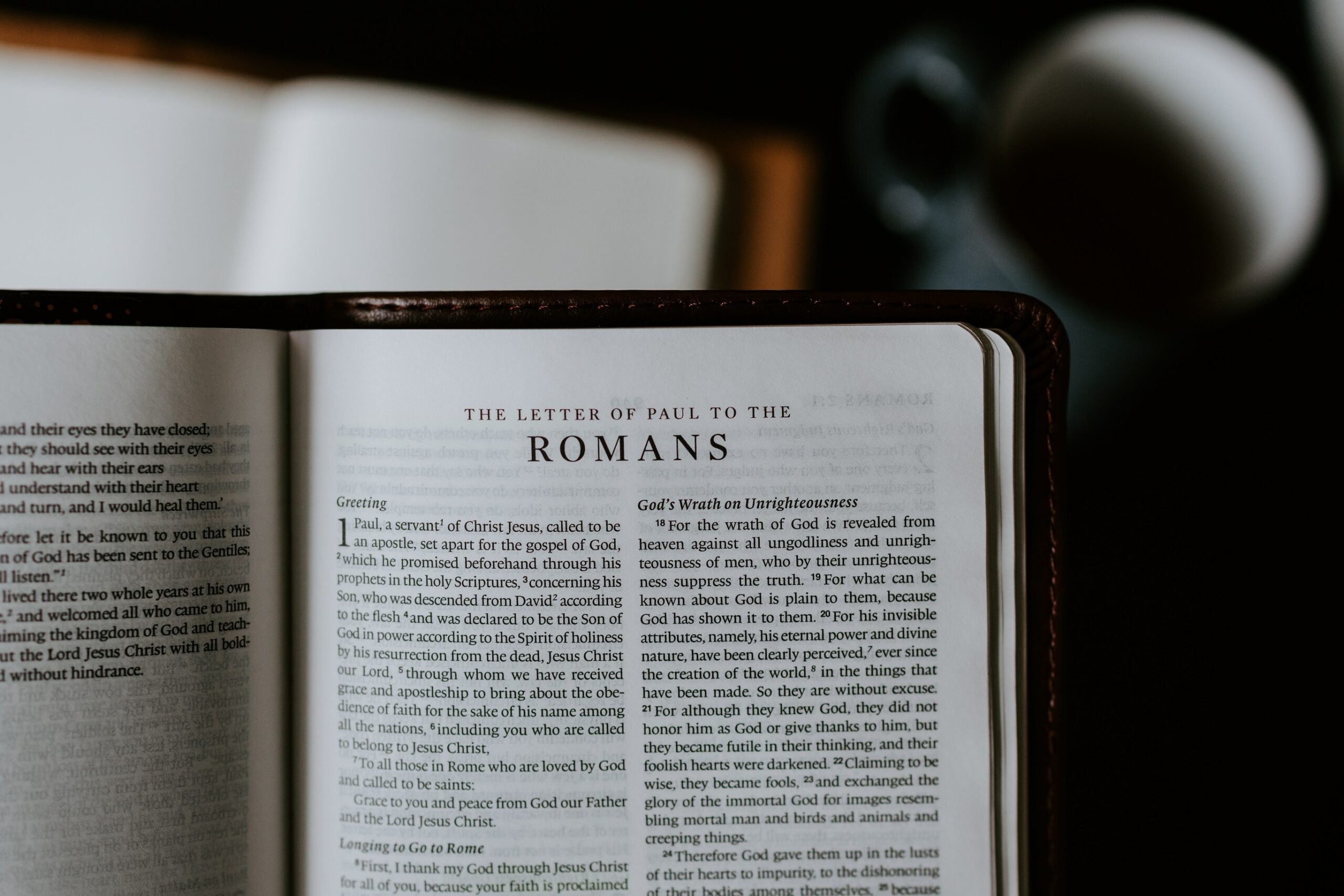
Below are some notes on the structure of Romans. Thanks to my student, John Lewis, who has done some interesting structural work on Romans, and shared his overall outline of the book with me. These notes are all tentative.
First, the general overview, and then some discussion of the linkages between the different sections:
1. Paul’s greeting to the Romans; summary of the gospel, 1:1-17 (obedience of faith) 2. Jew and Gentile under God’s judgment: Humanity under sin, 1:18-2:29 3. The righteousness by which we stand, 3:1-4:25 (*3:1ff//9:1ff) 4. Law and Spirit, 5-8 3.’ God’s righteousness in dealing with Israel, 9-11 2.’ Humanity under grace, 12:1-15:13 1’. Paul’s greeting and summary of gospel, 15:14-16:27 (obedience of faith, 16:26; longing to visit Romans; greetings)
B. More detailed consideration of the outer sections: 1. 1 and 1’: several connections; some obvious connections in content: greetings in the opening section and greetings sent in the later section a. First, it does seem that 1:1-17 makes a distinct section: gospel is mentioned in v 1 and again in vv 15-16; prophets in v 1, and he quotes from a prophet who supports his gospel in v 17; power of God in v 4, and power again in v 16 b. Between the 1 and 1’ sections: a number of verbal connections and connections of content: 1:11: longs to see the Romans; 15:23: same word (noun form): and this expresses the same longing c. Obedience of faith is found only in 1:5 and 16:23; see also the similar idea: the Gentiles become obedient in 15:18 d. Spreading reputation of the Roman church, 16:19; 1:8: their faith and obedience is known throughout the world e. 1:8 and 16:19: thanksgiving for the Romans, and rejoicing over them
2. The 2 and 2’ sections are less obviously connected: though I think that the characterization I’ve given them works pretty well: 1:18 at least to the end of ch 2: definitely God’s charges against Jew and Gentile: and in 12-15, Paul is teaching the Romans how to live together as one body, particularly how to deal with one another as strong and weak; there are a number of verbal connections: a. False worship and service (LATREUO), 1:25; 12:1: true worship, service, (LATREIA); 9:4 is the only other place where this word group appears in Romans; not only are we talking about idolatrous v true service, but we are also talking about bodies: dishonored bodies, 1:25 v the offered and sacrificed body in 12:1 (12:1 also picks up on 6:13, 19: which is in the central section of the letter) b. Wrath is found only in 1:18; 2:5, 8: God’s wrath against sin; and 12:19-13:5 is dealing with vengeance, and leaving room for the wrath of God c. The judgment word group is very prominent in these two sections: God’s wrath and judgment against sin in the early section: 2:1-5, 16, 27; 3:6; sound judgment and not judging one another in 12:3; 14:1, 3-4, 10, 13; only other place in Romans is 5:16 d. Honor: TIME: 2:7, 10; 12:10, 13:7: only other place is 9:21
3. While I’m counting words: some intriguing patterns: a. Gentiles is used 24x in Romans: a double 12: the double Israel b. The name Israel is used 11x in chs 9-11: if you add to this “Israelites” in ch 9 and “Israelite” in 11:1; there are 13 uses of Israel/Israelite(s): and the 13th is 11:26: all Israel shall be saved: would be nice if this were 12, but there were actually 13 tribes at various points in Israel’s history
C. At the center of the book is chs 5-8: this could be seen as an emphasis on individual soteriology: and that is more at work here than elsewhere, but I think the main theme of this section is actually the law and the Spirit:
1. there are some signs that this might itself be a chiastically arranged section of the book: haven’t worked it over enough to tell: here’s some hints: a. 5:1-11: tribulation leads to character; love of God; hope of glory b. 5:12-21: death through Adam, reign in life through Christ c. 6:1-23: dead to and freed from sin through baptism into Christ d. 7:1-6: death to law: through death and resurrection of Jesus; marriage to risen Christ c.’ 7:7-25: continuing flesh? Law and flesh; bondage/slavery b.’ 8:1-25: life through Spirit a.’ 8:26-39: tribulation; love of God; glorified
2. One of the clear themes that comes out of this is that God has done what the law, Torah, could not do: ch 7: the law comes to a man who is flesh, and it merely provokes sin; but those who are not of the flesh but of the Spirit keep the righteous requirement of the law; if this outline is correct, then the marital image of death to the law through the death and resurrection of Jesus is the center of the whole letter; this is the gospel, as Paul announced it in 1:1ff: the death and resurrection of the son, the transition from flesh to Spirit, fulfilling the law and prophets
Peter Leithart
Peter J. Leithart is President of Theopolis Institute. He is the author of numerous books on theology, literature, and culture, including Theopolitan, Defending Constantine, and Baptized Body.
More from Romans
Continue reading related articles
Zones of Gratitude
Homosexuality is one of the key public issues confronting today'sAmerican pastors. Nearly every pastor will counsel someone battling homosexual desires or actively engaged in a homosexual lifestyle. Compassionate, firm counsel is the least of the challenges. As the gay marriage movement makes headway, there has been subtle but relentless pressure…

God of Hope
Paul concludes his discussion of weak and strong in the church with a benediction: “Now may the God of hope fill you with all joy and peace in believing, so that you will abound in hope by the power of the Holy Spirit” (Romans 15:13). God is “God of hope”…
Strong and Weak in One Body
Romans 14-15 overlaps in several ways with 1 Corinthians 8—10. Both deal with problems about food. In both, Paul talks about the “weak” and the “strong,” and encourages the strong to defer to the weak. The overlap isn’t total. Romans 14-15 isn’t dealing specifically with meat sacrificed to idols, but…
In Medias Res
Your weekly digest for all things Theopolis.